Auxilium's Space Bioprinting Advances Nerve Repair and Tissue Manufacturing in ISS Mission
July 9, 2026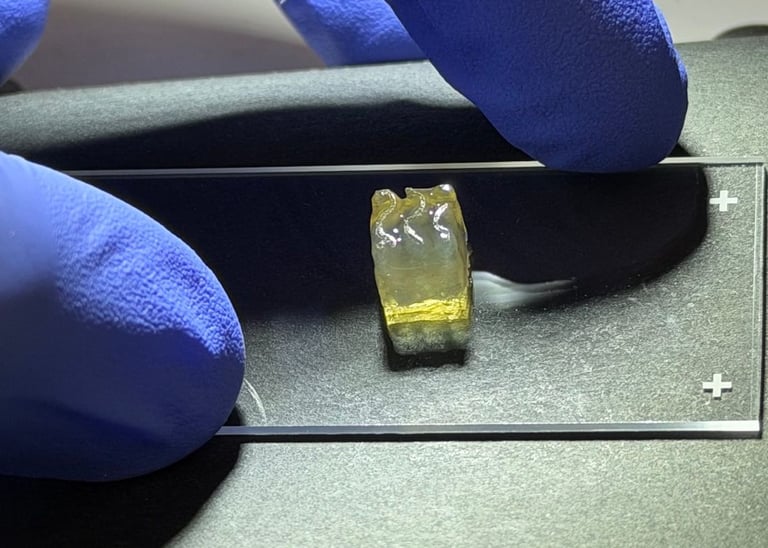


The 2024 ISS mission focused on improving nerve-repair implants through even particle distribution, using lessons that informed subsequent tissue-printing experiments.
Auxilium's space bioprinting program aims to improve nerve-repair implants by evenly distributing drug-containing particles, with successful tissue printing expanding capabilities for tissue manufacturing and potential medical devices in space.
Building on prior ISS work, the project treats orbital bioprinting as a research tool rather than an immediate factory solution, with long-term goals of off-planet tissue production for medical and industrial use.
Near-term value lies in creating organoids and tissue models for drug testing, potentially reducing animal testing as regulators push for alternatives, with the FDA highlighting organoids as a recommended option.
Liver and kidney tissues printed in space were returned to Earth about two weeks before the report and are under analysis to assess structure and cell distribution.
Analysts are examining the Earth-returned liver and kidney tissues to understand tissue structure and how cells are distributed within the printed constructs.
Wake Forest University supplied the liver and kidney cells, with Dr. Anthony Atala highlighting potential implications for in-space manufacturing of tissues and medical devices.
WFIRM designs guided the tissue fabrication, and Dr. Atala described the results as an important advance for regenerative medicine with uniform cell distribution.
Collaboration led by Dr. Atala's team at WFIRM provided the liver and kidney cells used in the experiments.
The project envisions future space-station developments with stakeholders like Vast and Starlab, signaling ongoing growth of space-based biomanufacturing infrastructure.
Regulatory pathways for space-produced medical products are in early stages, with industry involvement in FDA workshops; clinical deployment remains years away.
Koffler notes it will take years before space-produced medical products reach clinics, but establishing a regulatory framework is important now.
Summary based on 4 sources
Get a daily email with more Startups stories
Sources
Yahoo News • Jul 9, 2026
Space station bioprinting experiment advances quest for lab-grown tissues, company says
The Next Web • Jul 9, 2026
A startup just 3D-printed kidney and liver tissue in space, a first
WSAU News/Talk 550 AM · 99.9 FM | Wausau, Stevens Point • Jul 9, 2026
Space station bioprinting experiment advances quest for lab-grown tissues, company says
TCT Magazine • Jul 9, 2026
Space bioprinting milestone signals "new way of developing regenerative medicine"