Penn State Unveils Paintable Conductive Ink for On-Skin Wearable Sensors
July 13, 2026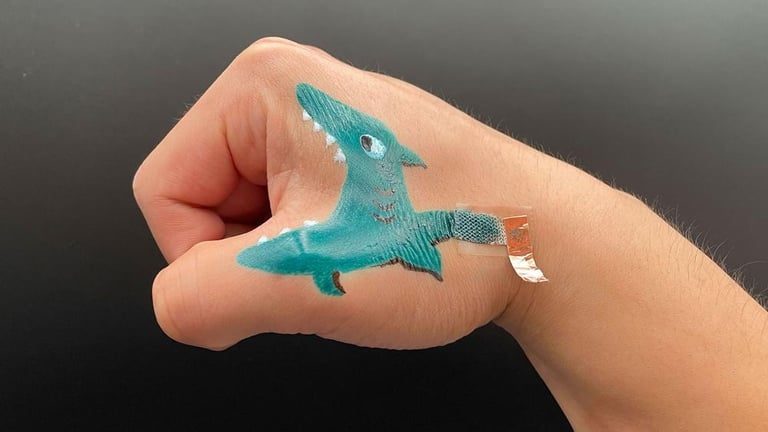


The porous silver textile remains adhesive as it expands to accommodate sweat, enabling stable performance during activity.
The ink is water-based, dries quickly, and enables on-skin dry electrodes that support wearable health monitoring.
Penn State engineers have created a paintable, conductive ink that can be applied directly to skin to power wearable sensors, enabling customizable, removable electrodes for health monitoring.
An international team from Penn State, MIT, and China’s Suzhou Institute developed a biocompatible polymer electrode that can be painted on skin to monitor ECG, EMG, heart rate, and brain activity, with reliable performance even under sweating.
A porous silver textile substrate connects the painted electrodes to a wearable module, providing stretch, better adhesion, and reduced irritation during moisture or sweating.
Future directions include potentially transforming the paintable electrodes into tattoo-like forms for cyborg interfaces, plant biometrics for agriculture, and pediatric electrophysiology with customizable designs to reduce anxiety.
Painted electrodes are highly stretchable, expanding over 150% of their original size while remaining connected during movement thanks to the porous silver textile.
Safety and practicality considerations include skin compatibility over 24 hours and the need for extensive evaluation for MRI compatibility, RF heating, specific absorption rate, and electromagnetic interactions under various MRI conditions.
The concept supports disposable electrodes paired with more expensive sensing modules, potentially reducing cost and increasing comfort for users.
This approach aims to reduce common electrode issues like detachment, skin irritation, and poor contact due to hair or sweat, with potential to sense other biomarkers such as cortisol or glucose in the future.
Overall, the work blends aesthetics with high-performance biocompatible sensors to advance patient care, prosthetics control, and environmental sensing through more comfortable, personalized wearables.
The system is washable, reapplicable, and modular, using disposable painted electrodes paired with a reusable wireless data transmission unit to optimize practicality and hygiene.
Summary based on 5 sources
Get a daily email with more Tech stories
Sources
Gizmodo • Jul 13, 2026
Scientists Created a Wearable You Can Paint Directly Onto Your Skin
CNET • Jul 13, 2026
Temporary Tattoos May One Day Power Your Wearable Medical Devices
BIOENGINEER.ORG • Jul 14, 2026
Paintable electrodes advance colorful, flexible wearable sensor technology
Popular Science • Jul 13, 2026
New paint-on health sensors are as fun as face paint