Astronomers Discover Largest Non-Cyclic Sugar Molecule in Space, Revealing Complex Interstellar Chemistry
July 13, 2026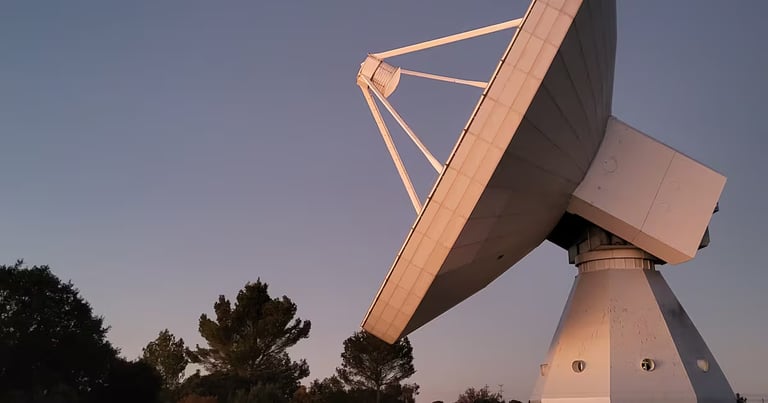

Discovery was enabled by observations from the 40-meter Yebes telescope and the 30-meter IRAM telescope, showcasing ultra-sensitive broadband spectroscopy.
Laboratory spectral fingerprints for sugars were used to identify erythrulose, after initial non-detections for glyceraldehyde and dihydroxyacetone.
Erika Hamden described the sugar as a pristine example of interstellar material, while noting her non-involvement in the research.
Erythrulose is a four-carbon ketose linked to raspberries and some Earth products, identified through 12 matched spectral lines.
Astronomers have detected erythrulose, a four-carbon sugar, in the interstellar medium, marking the largest non-cyclic molecule observed in space and a second known chiral molecule.
The finding suggests complex sugars are widespread in the galaxy and could inform how life's essential ingredients originated outside our solar system.
Erythrulose is not itself a life form but can convert into forms thought to spark prebiotic chemistry, indicating potential pathways for chemistry before life on a galactic scale.
The detection relies on 12 radio emission lines that match erythrulose’s predicted spectral fingerprint, achieved with ultrasensitive broadband surveys.
Lead author Izaskun Jiménez-Serra and independent expert Erika Hamden highlight the broader implications for spotting complex organics in space.
In the observed cloud, erythrulose is at least eight times more abundant than the simpler three-carbon sugars glyceraldehyde and dihydroxyacetone, which were not detected.
The results are published in Nature Astronomy in 2026, with online release in July by Jiménez-Serra and colleagues.
Erythrulose’s status as the largest interstellar molecule without ring closure and its rarity as a chiral molecule point to more complex interstellar chemistry than previously thought.
Summary based on 18 sources
Get a daily email with more Science stories
Sources
AP News • Jul 13, 2026
Astronomers find evidence of sugar in interstellar space | AP News
Gizmodo • Jul 13, 2026
Astronomers Detect Sugar in Interstellar Space for the First Time
Yahoo News • Jul 13, 2026
In a sweet discovery, astronomers find sugar lurking in the space between stars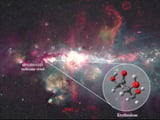
Phys.org • Jul 13, 2026
Study reports the first detection of a sugar in interstellar space