First Named Maya Mathematician Identified, Revealing Ancient Astronomical Mastery
July 14, 2026

A breakthrough attributes a complete mathematical and astronomical work to a named classical Maya mathematician, underscoring the era’s high level of scientific sophistication.
This finding marks the first instance of a named Maya mathematician, adding a personal dimension to Maya science beyond what’s visible in artifacts like the Dresden Codex.
Together, the results strengthen the view of Classic Maya intellectual life, highlighting precise calculations and the importance of individual authorship in ancient Maya science.
The surviving formula appears to connect Venus and Mars cycles with human time counting, suggesting use in political ceremony, predictive astronomy, or seasonality, though its exact function remains uncertain.
Context suggests the Xultun mural-lined chamber served as a workshop or residence for artisans or scribes, with plaster scraps potentially revealing more about Sak Tahn Waax and other scribes.
Researchers documented about 50 astronomical and mathematical paintings and texts, then created scale drawings and enhanced imagery to decipher them.
Inscriptions at Xultun, uncovered since 2010, are viewed as rough drafts by Maya mathematicians detailing celestial cycles relative to Earth and to one another, showing advanced knowledge despite later losses from colonial destruction.
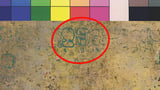
MIT-led researchers deciphered a mural (Text 19) containing an 11-hieroglyph inscription that names the author and presents a complex astronomical–mathematical formula.
Scholars describe the find as like examining an ancient scientist’s whiteboard, with some parts still obscure and needing further study.
Experts note the work’s significance in linking the formula to Maya ritual calendars and its possible influence on later texts, while questions remain about the author’s residence and broader context.
Text 19 combines a 260-day ritual calendar, a 365-day solar calendar, a 584-day Venus cycle, and a 780-day Mars cycle to produce a five-cycle, 2,920-day period dated to November 7, AD 781 (Julian calendar).
The deciphered formula represents a 2,920-day sequence as the convergence of eight solar years and five Venusian years, with additional Maya time subdivisions noted.
Summary based on 4 sources
Get a daily email with more Science stories
Sources
Gizmodo • Jul 13, 2026
Archaeologists Just Found the Earliest Known Named Scientist in the Ancient Americas
New Scientist • Jul 13, 2026
Maya mathematician’s name decoded alongside astronomical formula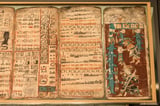
Scientific American • Jul 13, 2026
We finally know the name of a Maya mathematician