Breakthrough Study Reveals MHC-Independent Pathway for T Cell Attack on AML Cells
July 16, 2026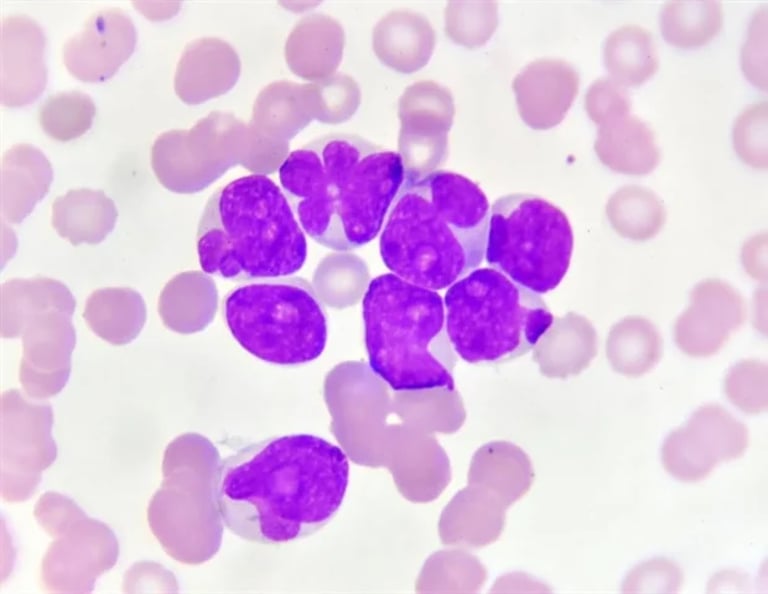

Future work will explore how CD64 and TCR signaling intersect at the molecular level and how these insights could be paired with approaches like stem cell transplantation to enhance therapy.
Overall, the results point to a novel, MHC-independent but TCR-assisted cytotoxic pathway that expands the toolkit for AML immunotherapy.
Interferon-gamma signaling appears to cooperate with CD64-driven mechanisms to enable T cell–mediated killing without traditional antigen presentation.
The findings link CD64 and interferon-gamma signaling as key drivers in a noncanonical T cell–AML interaction, revealed by the CRISPR screen.
A new study from MD Anderson shows that activated T cells can kill AML cells without relying on the traditional MHC-peptide recognition pathway, revealing an alternative cytotoxic route.
The observed effect held across multiple AML cell lines and primary patient samples, including those with high-risk mutations and relapsed disease, indicating broad relevance.
Interferon-gamma–related pathways emerged in the screen as part of this alternative cytotoxic route, suggesting a broader signaling network.
Genome-wide CRISPR screens identified CD64 as a pivotal driver: removing CD64 makes AML cells resistant to T cell killing, while introducing CD64 into resistant cells increases susceptibility.
CD64 is linked to early myeloid cells and its expression modulates sensitivity to T cell–mediated killing, underscoring its central role in this alternative pathway.
Even though MHC-independent, the pathway remains dependent on activated TCR signaling, implying a novel interaction between CD64 and the TCR machinery.
The research may explain AML’s sensitivity to immune-based therapies and could guide strategies to boost T cell–mediated killing in AML and potentially other cancers.
The study’s broad relevance across high-risk and relapsed AML cases underscores the potential impact on future treatment design and patient outcomes.
Summary based on 3 sources
Get a daily email with more Science stories
Sources

BIOENGINEER.ORG • Jul 16, 2026
Immune Cells Employ Novel Pathway to Eliminate Acute Myeloid Leukemia
UT MD Anderson • Jul 15, 2026
Immune cells use previously unknown pathway to eliminate AML
News-Medical • Jul 16, 2026
Researchers uncover new T cell attack mechanism against acute myeloid leukemia