Hidden Genetic Diversity Boosts Guam's Invasive Brown Tree Snake Resilience
July 27, 2026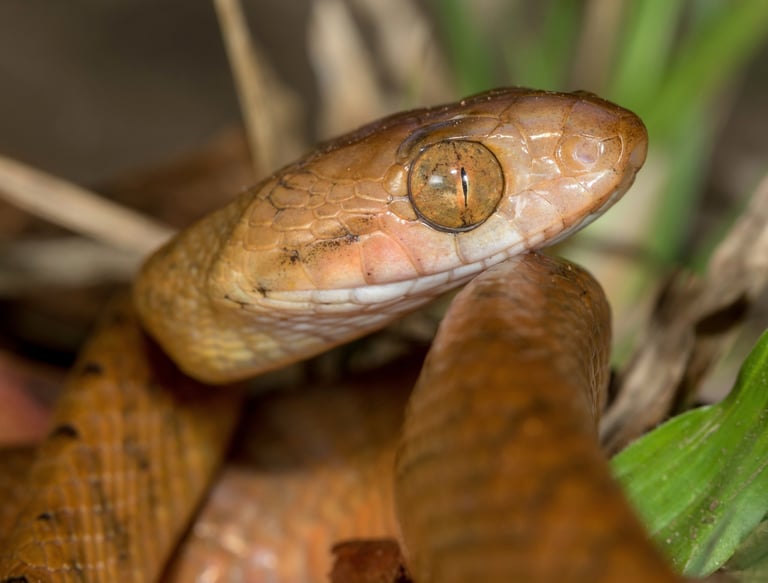

New genome research on Guam’s invasive brown tree snakes reveals substantial hidden genetic diversity, particularly in structural variants, which are enriched in immune and smell-related genes and may underpin adaptive traits like enhanced olfaction and immunity.
This diversity could increase the snakes’ resilience and adaptability in Guam, complicating management efforts aimed at controlling their population and mitigating ecological damage.
The study was conducted by researchers at the University at Buffalo in collaboration with USGS and is published in Science Advances.
Long-read sequencing uncovered more than 19,000 structural variants, indicating extensive genetic rearrangements beyond what standard methods detect.
There is uncertainty about whether these structural variants existed before Guam’s invasion or arose afterward, underscoring the need to compare with native-range snakes.
Despite extreme inbreeding across the genome, the population thrives across the island, signaling a severe bottleneck during invasion yet notable genetic resilience.
Structural variants are concentrated in gene promoters and in immune and olfactory gene families, suggesting these regions retain diversity despite inbreeding.
The findings prompt a rethink of conservation genetics for endangered species, highlighting hidden structural variation as a crucial source of diversity not captured by traditional measures.
Beyond Guam, the study emphasizes the importance of long-read sequencing to understand adaptation and resilience in small, inbred populations and to inform conservation strategies.
Science Advances shows that invasive brown tree snakes in Guam maintain substantial genetic diversity despite a small founding population, challenging bottleneck expectations.
This diversity may have contributed to reaching very high densities and sustained adaptability in the island environment.
Diverse immune and olfactory genes could support ongoing adaptability and possibly influence mate choice and immune compatibility among potential mates.
Summary based on 3 sources
Get a daily email with more Science stories
Sources
Gizmodo • Jul 27, 2026
Inbreeding Should Have Slowed Down These Pesky Brown Tree Snakes. Well…
SSBCrack News • Jul 26, 2026
Hidden Genetic Diversity Found in Invasive Brown Tree Snakes Reveals Adaptability Despite Inbreeding -
Earth.com • Jul 27, 2026
Brown tree snakes invaded Guam with a secret weapon