New Footprint Evidence Suggests Larger Size for Paranthropus boisei or Greater Variability in Homo erectus
July 27, 2026

analyses indicate 21 footprints from eight hominin individuals dating to the Early Pleistocene, about 1.43 million years ago.
The site’s discovery began in 1978, with ongoing excavations and re-evaluations through 2023 revealing more footprints from the same layer.
The findings feed into ongoing discussions about how different hominin species inhabited and moved through shared landscapes in eastern Africa during the Early Pleistocene.
Additional context notes GaJi10 yielded tracks from other large animals, and the proximity of different hominin tracks suggests overlapping ranges among early human relatives.
Note: Popular Science’s daily newsletter and a future awards section are mentioned, but they are not central to the scientific narrative.
Researchers note that even if the prints belong to P. boisei, they would extend the species’ known body size range, while if attributed to H. erectus, they imply more morphological variation than in modern humans.
Led by Kevin Hatala, the study combines international fieldwork to reassess locomotion and behavior of early hominins, highlighting Lake Turkana in Kenya as a crucial paleoanthropological landscape.
The site preserves a broader ecosystem snapshot, with hippos, bovids, birds, and equids sharing a mudflat environment, painting a lakeshore landscape with real predation and competition risks.
The initial tracks were discovered in 1978, with further footprints uncovered in 2016 and 2023, now described in a Proceedings of the National Academy of Sciences study.
Researchers will continue fieldwork to refine geology and sediment conditions to better interpret footprint preservation and locate additional hominin traces.
New footprint evidence raises the possibility that Paranthropus boisei individuals could have reached heights taller than previously estimated, or that Homo erectus showed greater variability in footprint shapes.
Footprint analysis at GaJi10 suggests body sizes similar to Homo erectus, with estimates up to about six feet and around 165 pounds for Paranthropus boisei at the site.
Summary based on 4 sources
Get a daily email with more Science stories
Sources

New Scientist • Jul 27, 2026
Mystery hominin left big footprints at ancient lake in Africa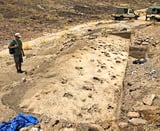
Smithsonian Magazine • Jul 27, 2026
Ancient Fossil Footsteps Found in Kenya May Hint That an Early Human Relative Was Larger Than Previously Thought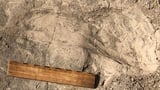
Popular Science • Jul 27, 2026
Toothy human ancestor may have traveled in all-male packs
Mirage News • Jul 27, 2026
Ancient Human Relative Larger, Traveled in Groups