Jodrell Bank Faces Shutdown as UKRI Funding Cuts Threaten UK Radio Astronomy Future
July 27, 2026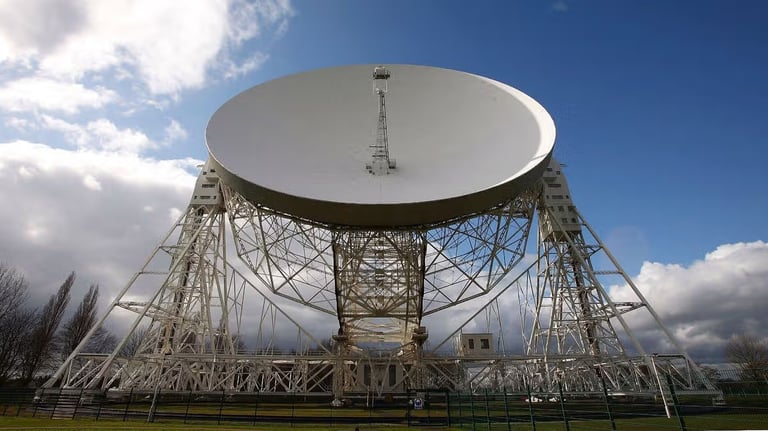


Experts argue the decision is short-sighted scientifically and economically, potentially hindering training and the country’s competitiveness in radio astronomy.
Jodrell Bank Observatory in Cheshire faces closure as UKRI cuts its annual funding, threatening all scientific observations from April 2028 unless alternative funding is found.
The observatory, home to the Grade I-listed Lovell telescope, could shut after UKRI decided to withdraw support for the e-MERLIN network when the current funding agreement ends in March 2028.
Scientists, including Prof Catherine Heymans, warn the decision would devastate the UK’s national radio astronomy facility and its ability to observe without new funding.
Beyond science, the observatory is noted for its cultural and educational significance, visible in its science fiction associations, UNESCO designation, and historic Cold War-era contributions.
Historically central to UK radio astronomy, the Lovell telescope and the e-MERLIN network have studied distant galaxies, star and planet formation, dark matter and dark energy, and trained generations of astronomers.
The Lovell telescope, as the third-largest steerable radio telescope, together with e-MERLIN, provides high-resolution observations rivaling the Hubble Space Telescope, crucial for studying cosmic phenomena.
Industry response highlights tensions between funding limits and sustaining world-leading research infrastructure, with concerns about broader impacts on UK astronomy and discovery science.
The move comes amid international radio astronomy developments, including the Square Kilometre Array, raising concerns the UK could fall behind in a burgeoning era of discovery.
STFC says withdrawal follows a rigorous prioritisation process to allocate funding to areas with greatest long-term capability and value, focusing on future radio astronomy facilities.
UKRI maintains the goal is to protect core discovery research while achieving a sustainable position by 2029/30, prioritising investments with higher long-term impact.
Reaction from scientists and union bodies is critical, warning the cuts threaten the UK’s science reputation and the future of physics facilities and careers.
Summary based on 4 sources
Get a daily email with more World News stories
Sources
The Guardian • Jul 27, 2026
Jodrell Bank Observatory facing closure after major funder cuts support
BBC News • Jul 27, 2026
Jodrell Bank's Lovell telescope faces axe in science cuts, BBC understands
BBC News • Jul 27, 2026
Jodrell Bank's Lovell telescope faces axe in science cuts, BBC understands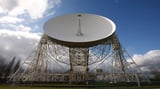
Daily Mirror • Jul 27, 2026
Jodrell Bank’s iconic telescopes loses funding and set to be axed in government cuts