New Study Reveals Current Breast Cancer Referral Criteria Miss 95% of Future Cases in Women Under 50
August 4, 2026


Public sentiment favors proactive risk assessment for 30–34–year-olds, with openness to invitations for risk assessment and use of comprehensive tools like BOADICEA despite more assessments and genetic testing.
A new study challenges NICE’s current breast cancer referral criteria for women under 50, showing they miss up to 95% of cancers that will develop within a decade.
BOADICEA-based strategies improve sensitivity for identifying high-risk individuals and predicting cancer within ten years, but require a larger portion of the population to undergo risk assessment and referrals than NICE criteria.
A striking finding is that 73% of women under 50 who develop cancer in ten years have no family history, which is the main criterion in NICE’s approach.
Next steps involve evaluating how multifactorial risk assessment could be implemented safely, equitably, and cost-effectively in routine care, with ongoing UK evaluations and potential NHS investment in family history services.
Dr. Sowmiya Moorthie of Cancer Research UK stresses the need for changes that are accessible and equitable while managing potential anxiety from increased referrals.
Authors acknowledge broader risk assessment would heighten resource use and false positives, calling for balance among practicality, cost, and potential harms and benefits.
NICE issued a cautious statement, remaining open to future updates as more feasibility and outcome data become available.
Sensitivity analyses show robust findings; the study received ethics approval with informed consent from participants.
Including polygenic scores (PGS) improves BOADICEA calibration and discrimination modestly; removing unaffected relatives has limited impact, while removing PGS sharply reduces sensitivity and increases the number needed to assess when evaluating the whole population.
Experts like Dr. Juliet Usher-Smith and Prof. Montserrat García-Closas highlight the trade-off between implementation ease, accuracy, and costs in revising risk criteria.
Beyond risk tools, the study emphasizes general cancer risk-reduction measures and prompt GP consultation for unusual changes to improve early diagnosis.
Summary based on 5 sources
Get a daily email with more World News stories
Sources

The Guardian • Aug 4, 2026
GPs’ breast cancer guidelines ‘miss’ 95% of women who will develop disease
BBC News • Aug 4, 2026
Breast cancer checks missing lots of at risk younger women, says study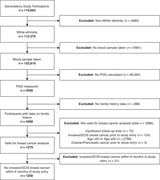

Daily Mirror • Aug 4, 2026
Breast cancer screening misses up to 95% of women under 50 who are at high risk