Tiny Dragonfly Sets Record for Longest Insect Migration, Surpassing Monarch Butterflies
August 7, 2026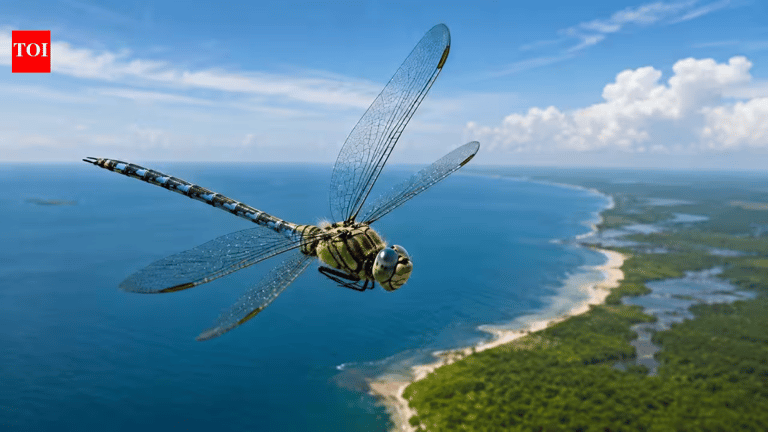

The globe skimmer dragonfly (Pantala flavescens), a tiny insect barely an inch and a half long, undertakes migrations spanning thousands of miles and connects populations across multiple continents.
Rutgers researchers show these dragonflies migrate across oceans by leveraging wind currents, with wing adaptations that increase surface area to ride weather systems with minimal energetic cost.
Its wing design, including a larger wing surface area and an enlarged hindwing base, enables energy-efficient gliding and wind-assisted travel, aided by freshwater-dependent reproduction patterns that align with seasonal moisture changes.
Migration is closely linked to reproduction: Pantala dragonflies move to wetter regions to mate and lay eggs, sometimes journeying around 4,400 miles or more to find suitable breeding environments.
Estimated migratory reach exceeds 4,400 miles with transgenerational circuits spanning 14,000 to 18,000 kilometres between India and East Africa.
Pantala flavescens now surpasses monarch butterflies as the longest-distance migrating insect, even exceeding historic feats by miles.
A staged, multigenerational journey is suggested, with temporary freshwater pools serving as breeding stops that propagate an intercontinental travel narrative across generations.
Lead author Jessica Ware notes the lack of regional genetic differences implies extensive gene flow across oceans and continents, supporting a global panmictic population.
Genetic data from dragonflies collected across diverse regions show strikingly similar DNA, indicating a single worldwide gene pool rather than isolated populations.
The study analyzed 49 CO1 mitochondrial DNA sequences from samples worldwide, finding minimal genetic differentiation between continental populations.
Precise migration routes remain uncertain due to tracking challenges on such small insects; researchers rely on genetics and wing isotope data to infer likely paths.
The Rutgers-led study in PLOS ONE emphasizes the need for broader sampling and new markers to map specific migration routes, acknowledging tracking devices are challenging to deploy on tiny insects.
Summary based on 2 sources
Get a daily email with more Science stories
Sources

The Times Of India • Aug 7, 2026
In 2016, Biologists at Rutgers University discovered that the globe skimmer dragonfly is the world's long
Economic Times • Aug 6, 2026
In 2016, scientists identified the globe skimmer as the world's longest-distance insect flyer. Years later