Neural Signaling's Role in Cancer Immunotherapy: New Strategies to Boost Treatment Efficacy
August 13, 2026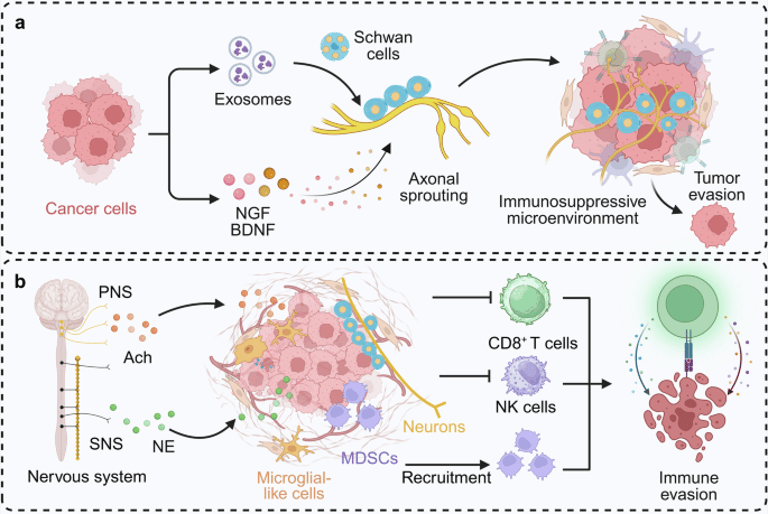

Nerves infiltrating tumors release neurotransmitters and neuropeptides that drive cancer cell migration, angiogenesis, and anti-apoptotic signaling, while neural signaling reshapes immune and stromal components to foster metastasis.
In specific tumor contexts, neural-immune interactions matter: in OSCC, A2AR-CGRP signaling promotes growth and CGRP blockade sensitizes tumors to therapy; in melanoma and HNSCC, CGRP signaling dampens CD8+ T cell function and its inhibition improves responses, with denervation enhancing anti-tumor immunity across models.
Neural regulation represents a multi-level influence on cancer immunotherapy, linking tumor innervation, neurotransmitter signaling, glial activity, and neuroendocrine pathways to immune recruitment, function, and therapeutic response.
Strategies to interrupt tumor‑nervous system communication include beta-blockers to inhibit adrenergic signaling, with ongoing trials, alongside approaches targeting neurotrophic signaling, nerve growth, and neuroimmune modulation, though tumor-selective effects and neurological side effects pose challenges.
Peripheral nerves and central neural circuits coordinate local tumor microenvironment dynamics and systemic immunity, with stress and circadian rhythms modulating anti-tumor responses through autonomic outputs.
Chronic stress activates adrenergic signaling via beta-adrenergic receptors to promote growth, angiogenesis, metastasis, and immune suppression, while blocking this pathway can slow tumor progression in preclinical models.
A new era of cancer neuroscience uses advanced imaging, molecular profiling, and single-cell approaches to map neural circuit influences on cancer, aiming to improve prognostic stratification and develop neural-targeted therapies, though most mechanistic data are from preclinical models and translation is ongoing.
Sympathetic signaling through beta-adrenergic receptors and catecholamines shapes tumor metabolism, vasculature, metastatic niche formation, and immune cell function, influencing immunotherapy efficacy.
Neuroimmune feedback disruption can drive therapy resistance, as seen with perineural invasion in colorectal cancer and glioma-driven glutamatergic signaling promoting an immunosuppressive tumor microenvironment; targeting these pathways may restore immune surveillance and improve outcomes.
Perineural invasion provides routes for local and regional spread, guided by neurotrophic factors toward nerves, contributing to pain and recurrence, with prognostic significance varying by cancer type.
Summary based on 2 sources