Tsetse Fly Bite Mechanics Unveiled: Versatile Feeding Explains Broad Host Range and Disease Transmission
August 19, 2026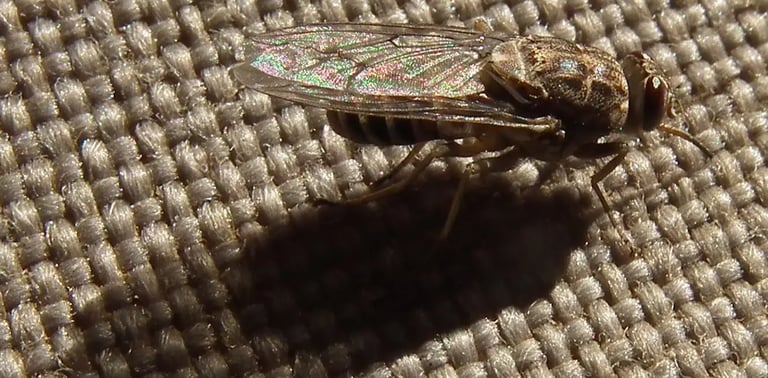


The study shows that tsetse mouthparts, especially the labellum with rows of tiny teeth, work in coordination, and the flies’ backward feeding strokes act like a microscopic saw to pierce and drain blood from varied skin types.
Tsetse feeding is a pool-feeding process rather than syringe-like; tissue damage precedes blood pooling, distinguishing it from mosquito feeding.
In essence, tsetse are pool feeders whose versatility in penetrating different skins explains their broad host range.
Superpower.
Sleeping sickness has been reduced to historically low levels due to sustained surveillance, diagnosis, and treatment, but animal trypanosomiasis remains a major economic burden for rural communities reliant on cattle.
Public-health success in reducing human sleeping sickness contrasts with animal trypanosomiasis continuing to pose significant economic and health challenges.
Contrary to expectations, the strongest forces are generated during backward strokes, functioning as a cutting motion rather than a simple puncture.
Traditional tsetse control methods—such as insecticide-treated cattle, odour-baited traps, aerial spraying, and sterile male releases—can reduce local populations but struggle to eradicate tsetse across large, diverse ranges.
Current control strategies, while useful locally, are costly and insufficient for the tsetse’s vast range, underscoring the need for new approaches.
Tsetse flies transmit serious diseases in sub-Saharan Africa, affecting humans, livestock, and wildlife, with sleeping sickness a major human disease and animal trypanosomosis causing economic losses.
Overall, the study reframes tsetse feeding as a biomechanical system where anatomy, mechanics, and behavior together enable a broad host range and efficient parasite transmission.
Tsetse feed on a wide range of hosts, creating transmission networks across wildlife, livestock, and humans.
Summary based on 5 sources
Get a daily email with more Science stories
Sources
The Independent • Aug 20, 2026
Tsetse fly: The blood-sucking insect that can bite through almost anything – and is found in 37 countries