Proteogenomics: Unveiling Disease Mechanisms and Drug Targets Across Populations
August 21, 2026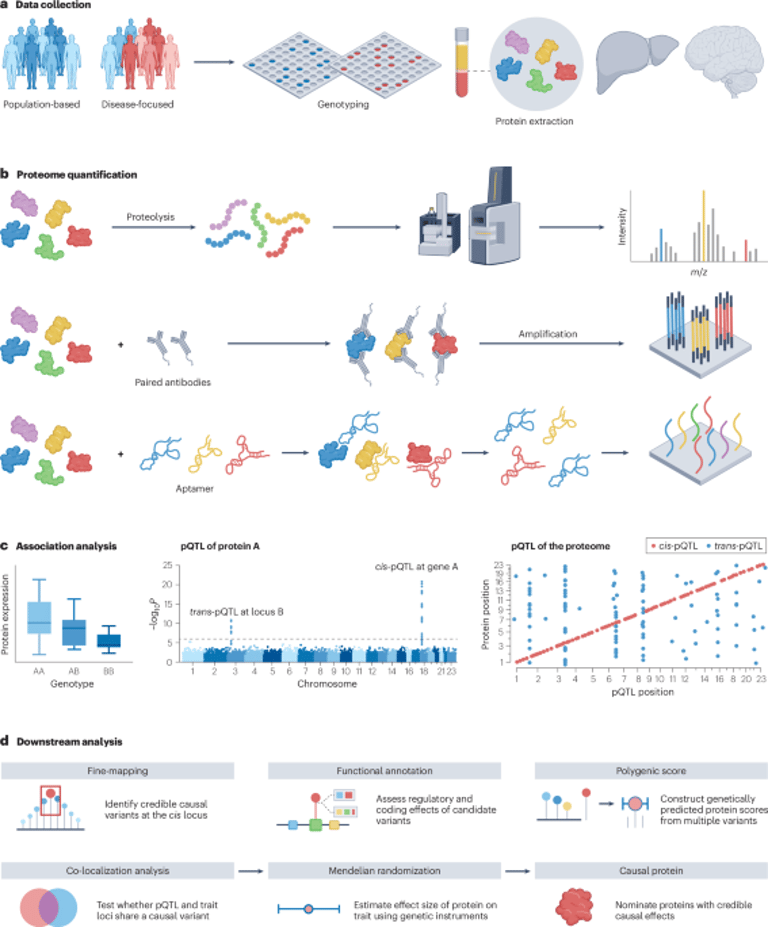

The collected works illustrate how proteogenomics identifies causal proteins, prioritizes drug targets, and maps genetic regulation of the proteome to disease biology, guiding therapeutic insights.
This compilation surveys proteogenomics across diverse populations, diseases, and phenotypes, showing how integrating proteomic data with genomics advances understanding of disease mechanisms and potential treatments.
The scope spans foundational studies from the early 2000s to 2026, including multi-cohort and population-focused research across varied diseases.
Key methodological approaches include genome-wide association studies, Bayesian colocalisation (COLOC), mixed-model analyses for biobank data, and PLINK-based genetic analyses.
The list is a reference compilation, and a synthesized narrative should connect studies to overarching conclusions rather than recounting each item.
Notable study types feature large-scale plasma proteome projects, tissue- and CSF-specific proteogenomics, and papers on GWAS, fine-mapping, colocalisation, and biobank-scale analyses.
Representative topics cover proteogenomic characterizations in cancer, Parkinson’s and Alzheimer’s diseases, regulatory DNA variation localization, and integrating genetics and proteomics to identify disease mediators, including population-specific analyses.
Core themes include proteogenomic mapping, pQTLs, and combining large-scale proteomic with genetic data to link circulating proteins to cancers, neurodegenerative and cardiometabolic diseases.
Summary based on 1 source