Targeting Glycolysis May Hold Key to Treating Autoimmune Diseases Like MS
August 24, 2026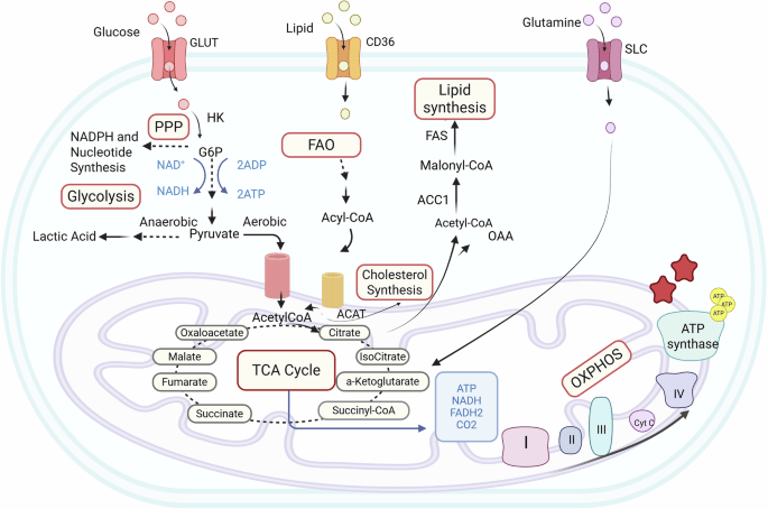

In multiple sclerosis (MS) and EAE models, pathogenic Th17 cells show a glycolytic shift with increased expression of GLUT1, HK, GAPDH, PKM, and LDHA, and inhibiting glycolysis can reduce CNS inflammation and demyelination.
Dysregulated glycolysis and mTORC1/HIF-1α signaling in CD4+ T cells promote Th1/Th17 responses while suppressing Treg differentiation; glycolysis inhibitors such as 3-BrPA, 2DG, and PFKFB3 inhibitors have been shown to lessen disease severity and boost Tregs in models.
The adaptive immune system relies on T and B lymphocytes, and autoimmunity emerges when self-reactive cells escape tolerance mechanisms.
Memory T cells favor oxidative phosphorylation (OXPHOS) and harbor higher mitochondrial content with elongated mitochondria, supporting rapid responses upon antigen re-exposure.
Immunometabolism links lymphocyte function to metabolic programs, and disruption of these pathways can fuel autoimmune activation and disease progression.
A comprehensive view shows metabolic reprogramming in T and B cells shapes the onset and progression of T cell–driven autoimmunity, with glycolysis, the mTOR/HIF-1α axis, GLS1, and DHODH as promising therapeutic targets.
Effector T cells rely on glycolysis and de novo fatty acid synthesis, whereas regulatory T cells depend more on fatty acid oxidation and OXPHOS, underscoring metabolic distinctions that influence helper versus regulatory outcomes.
Autoimmune diseases such as MS, type 1 diabetes, rheumatoid arthritis, and SLE involve dysregulated T cell–mediated responses, including cytotoxic T cells, proinflammatory CD4+ T helpers, and interactions with APCs and B cells.
Mitochondrial dysfunction in CD4+ T cells—altered ROS, deficits in SOD/GPX, and impaired apoptotic clearance—contributes to MS progression by supporting autoreactive memory T cell survival and inflammatory signaling; restoring apoptosis pathways can mitigate disease in models.
MS therapies like glatiramer acetate, IFN-β, and DHODH inhibitors modulate T cell metabolism by reducing glycolysis and oxidative phosphorylation, aligning patient T cell profiles closer to healthy controls.
B cell metabolism shifts from resting OXPHOS/FAO to glycolysis upon activation; germinal center B cells favor FAO in the dark zone, with glycolytic bursts upon Tfh help to re-enter proliferation, while plasma cells rely on high OXPHOS and de novo fatty acid synthesis for antibody production.
Naïve T cells predominantly use OXPHOS; activation reprograms them to glycolysis, fatty acid synthesis, and glutaminolysis to support proliferation, with c-Myc driving upregulation of glycolytic genes such as Glut1.
Summary based on 1 source
Get a daily email with more Science stories
Source
Nature • Aug 24, 2026
Metabolic switch: lymphocytes and the onset of T-cell-mediated autoimmunity