Massive Ice Island Breaks Off Greenland's Petermann Glacier, Largest Calving Since 2020
August 26, 2026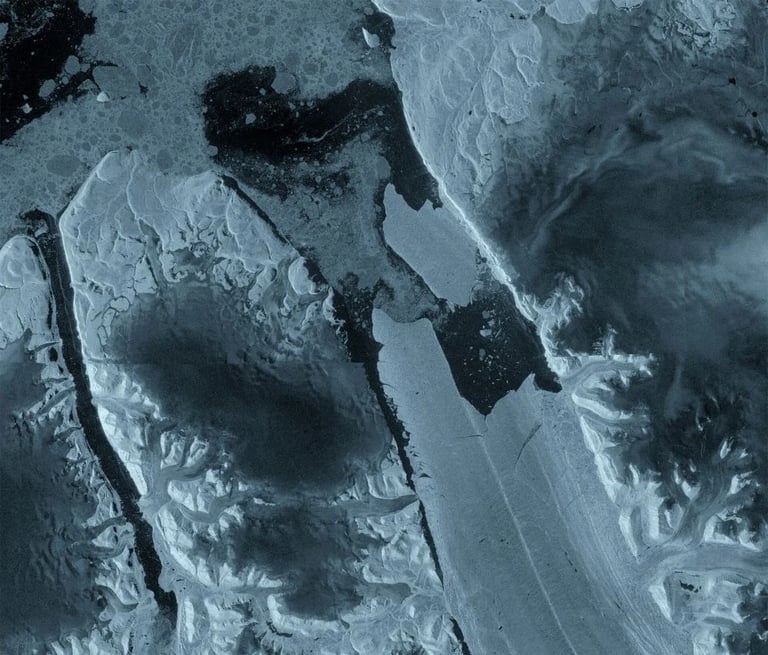


Balog’s Extreme Ice Survey amassed over 1.5 million images across 15 years, documenting ice-sheet and sea changes and culminating in archival at the National Snow and Ice Data Center.
Ongoing rift propagation and calving are tied to broader shifts in Greenland’s glaciers and polar environments, with Sentinel-1 data enabling near-real-time monitoring of crack growth.
Experts note that Arctic calving events are less common than in Antarctica, and studying these ice islands helps transfer understanding of polar processes to other regions and inform navigation and infrastructure risk.
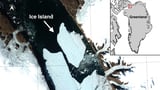
A major calving event at Greenland’s Petermann Glacier on August 4, 2026 released a 76.4 square kilometer ice island—the largest floating-ice loss from the glacier since 2012 and the biggest Arctic calving event since 2020.
Two additional potential ice islands, estimated at roughly 97 and 87 square kilometers respectively, may detach if existing fractures continue to propagate, signaling ongoing instability at the glacier.
Petermann Glacier, a large marine-terminating system, routinely sheds icebergs into the ocean, with scientists using satellites to monitor changes since 2019.
Researchers from the University of Ottawa and the University of Leeds witnessed the event in real time via the Sentinel-1 radar satellite, which images through clouds and at night.
Scientists will continue tracking the aftermath with satellite imagery, aerial observations, and tracking data as part of broader efforts to understand calving and retreat processes in Arctic ice shelves.
Balog aims for his photographs to serve as a present record and a message to the future about the immediacy of climate change and the need for attention to the issue.
Researchers like Adam Garbo and Anna Crawford emphasize that this break confirms expected instability and shows how quickly polar systems can change, offering insights for polar regions at large.
Arctic ice islands are rarer than their Antarctic counterparts, and studying them helps researchers understand polar change and inform safety for drifting ice in shipping and offshore operations.
Some research suggests iceberg instability and tipping can generate dangerous waves in fjords, known as tsunamigenesis.
Summary based on 12 sources
Get a daily email with more Science stories
Sources
ScienceDaily • Aug 26, 2026
Manhattan-sized ice island breaks off Greenland’s Petermann Glacier
Universe Today • Aug 26, 2026
A Greenland Glacier Loses Another Chunk of Ice