NASA's Roman Telescope Achieves Major Milestone with Antenna and Sunshade Deployment
September 1, 2026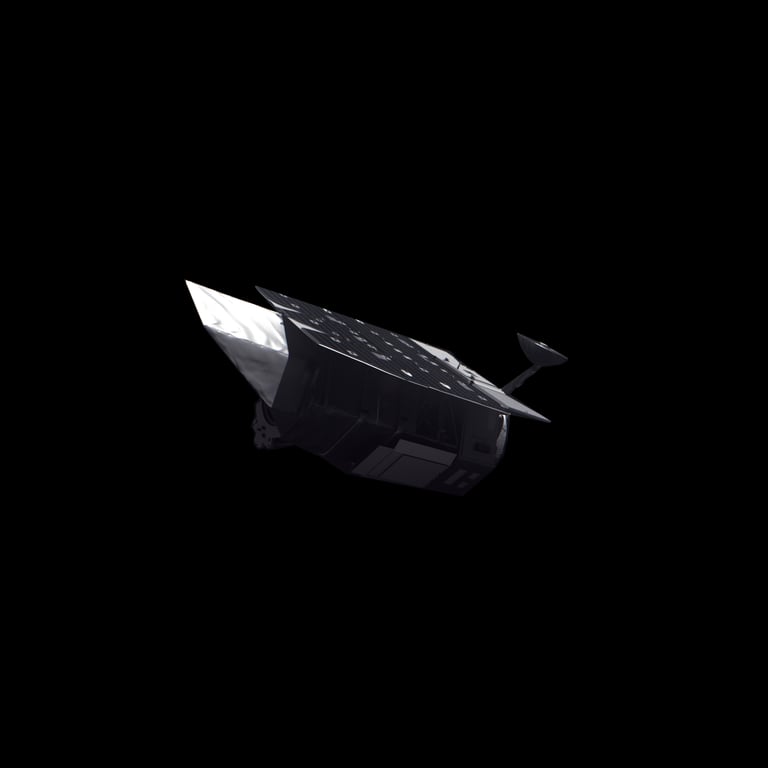

NASA notes that deploying the high-gain antenna and visor-like sunshade is a key step toward enabling high-volume data transmission and optimal telescope performance during Roman’s mission operations, and the two systems have been deployed as part of commissioning.
NASA’s Roman Space Telescope has completed the deployment of its high-gain antenna and sunshade, marking a major milestone in its commissioning process.
With the coronagraph, scientists will capture visible-light images of giant, older, cooler planets and dusty disks, including bodies in closer orbits than those revealed by previous direct-imaging efforts.
The coronagraph power-on occurred early on September 1, 2026, initiating a months-long calibration and testing phase ahead of full science operations.
Roman’s initial observations will follow a planned three-month sequence spread over the mission’s first 18 months of operations.
The Coronagraph Instrument uses advanced optics, masks, self-flexing mirrors, and sensors to demonstrate cutting-edge space-flight technologies for directly imaging exoplanets and circumstellar disks.
The deployable aperture cover, acting as a sunshade to block stray light, deployed via three electronically triggered booms and completed its sequence by early morning on September 1.
Upcoming milestones during a three-month commissioning period include activation of the Coronagraph Instrument and power-on of the Wide Field Instrument, with first images expected by early 2027.
The antenna, 5.6 feet wide and weighing 24 pounds, constructed from carbon composite, endures wide temperature changes and enables downlink of up to 500 megabits per second to ground stations in several regions, with a dual-band configuration for commands and health data.
NASA’s Roman Space Telescope has activated its Coronagraph Instrument to block starlight and enable direct imaging of exoplanets and dusty disks around nearby stars.
Beyond direct imaging, Roman will also search for exoplanets via microlensing and transit methods, expanding its scientific reach.
Further details about Roman’s exoplanet mission and commissioning are available on NASA’s Roman Space Telescope Science pages.
Summary based on 2 sources
Get a daily email with more Science stories
Sources
NASA Science • Sep 1, 2026
NASA Roman's Planet Imager Has Powered On - NASA Science
NASA Science • Sep 1, 2026
NASA Roman Space Telescope’s Antenna, ‘Visor’ Deployed - NASA Science