New Striatal Neuron Atlas Reveals Key Insights into Addiction, Depression, and Schizophrenia
September 1, 2026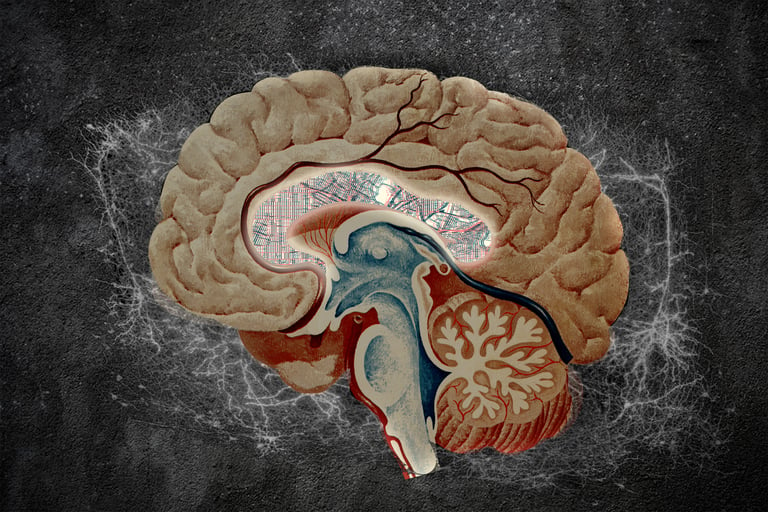

The study used single-cell RNA sequencing, multiplexed FISH, and spatial transcriptomics on the postmortem samples to create the atlas.
Comparisons between human tissue and mouse models reveal species-specific differences, such as human D1 outliers expressing mu opioid receptor OPRM1 at higher levels than in mice, underscoring limitations of traditional rodent models for opioid research.
These species differences suggest the potential benefit of humanized models to better study substance use disorders and opioid responses.
The atlas provides a foundational roadmap for Huntington’s disease and opioid use disorder research, enabling more precise therapeutics by targeting specific striatal neuron subpopulations involved in decision-making, movement, and reward.
By mapping diverse neuron subtypes, the work aims to guide drug development and reduce adverse effects through targeted interventions in the striatal circuitry.
Researchers collected diverse postmortem striatal samples from brain banks across the U.S. and Canada to map cellular organization and establish overarching principles of striatal structure.
The study highlights two D1 and D2 outlier neuron populations that carry addiction- and antidepressant-related gene signatures, with both outliers shown to respond to the antipsychotic clozapine.
The atlas clarifies why the dorsal striatum is more vulnerable in Huntington’s disease by showing higher expression of MSH2 and MSH3 in dorsal medium spiny neurons, which can drive CAG repeat expansion, while identifying a ventral island-like neuron population with resilience to CAG accumulation.
In addition, a ventral island-like neuron population appears more resistant to CAG-repeat buildup, offering potential insights into neural protection mechanisms.
A detailed atlas of striatal neurons has been created using single-cell RNA sequencing, multiplexed fluorescent in situ hybridization, and spatial transcriptomics, identifying 31 neuronal subpopulations including nine types of medium spiny neurons and two notable outlier groups linked to addiction, depression, and schizophrenia.
Funding came from the National Institutes of Health and multiple foundations, and the work appears in the journal Cell with senior authorship attributed to Myriam Heiman and collaborators.
Outlier neuron populations reveal drug-response relevance: D1 outliers exhibit addiction- and opioid-related gene expression, and D2 outliers show antidepressant-responsive gene expression, informing targeted therapies.
Summary based on 2 sources
Get a daily email with more Science stories
Sources
MIT News | Massachusetts Institute of Technology • Sep 1, 2026
Atlas of the brain’s striatum could guide researchers to new drug treatments
Mirage News • Sep 1, 2026
Brain Striatum Atlas May Guide New Drug Discoveries