SARS-CoV-2 Enzyme Suppresses Influenza, Shedding Light on Pandemic Virus Interactions
September 2, 2026

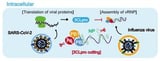
A Chinese research team reports that the SARS-CoV-2 main protease, 3CLpro, can cleave influenza proteins NP and PA, causing their degradation and mislocalization, which potentially suppresses influenza replication during coinfections.
The authors propose that SARS-CoV-2 may actively suppress competing influenza via direct proteolytic action, offering a possible explanation for the decline in influenza cases observed during the COVID-19 pandemic.
Administration of the 3CLpro inhibitor nirmatrelvir reverses the suppression of influenza replication, confirming that the effect is specifically mediated by 3CLpro enzymatic activity.
Researchers identified potential 3CLpro cleavage sites in influenza NP and PA through an in silico scan and validated these sites experimentally with a luciferase-based cleavage assay and Western blot analysis.
Beyond basic science, the work points to therapeutic and vaccine design implications, such as engineering cleavage sites to attenuate influenza or guiding broad-spectrum antiviral strategies that target 3CLpro interactions.
When 3CLpro is expressed in cells, influenza NP relocates from the nucleus to the cytoplasm and its levels drop; PA also becomes vulnerable, indicating disruption of influenza replication machinery.
The study underscores the importance of investigating virus-virus interactions during coinfections and their clinical relevance in pandemic contexts.
Infected cells expressing 3CLpro show markedly reduced replication across multiple influenza strains (A and B), and findings are corroborated in a SARS-CoV-2 replicon system, suggesting robustness across models.
Summary based on 1 source
Get a daily email with more Science stories
Source
EurekAlert! • Sep 2, 2026
SARS-CoV-2 uses its “scissor” (3CLpro) to chop the influenza virus’s guts (NP and PA)