AI-Driven IRIS Framework Revolutionizes Stem Cell and Embryo Signaling Studies
September 8, 2026


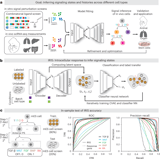
We introduce IRIS, an AI-driven framework trained on extensive human embryonic stem cell perturbation data to map signaling influences, then tested in mouse embryos during gastrulation to predict when and where pathway activations occur as cells differentiate into heart, gut, muscle, and spinal cord tissues.
IRIS reconstructs spatiotemporal signaling dynamics in mouse gastrulation (approximately early developmental days) and reveals dynamic shifts in pathway activity, showing lineage-specific histories such as BMP activity in the cardiac lineage and broad WNT/FGF/BMP signaling across many cells.
The training relied on data from six major signaling pathways across multiple developmental stages to build an atlas of how pathways influence cell fate.
Potential and actual applications include advancing disease models for asthma, lung cancer, and pulmonary fibrosis, improving therapy testing, and guiding regenerative treatments.
The approach could enhance stem cell engineering and disease-model organoids by recreating developmental signaling in vitro, aiding regenerative strategies.
The study, published in Nature Methods, sets groundwork for using transfer learning in developmental biology, enabling learned patterns to assist analyses in new contexts.
IRIS shows strong performance in data-limited, cross-species settings, indicating transferable signaling signatures beyond the training context.
The framework resolves signaling states at single-cell resolution within heterogeneous populations, enabling detection of lineage-specific signals and morphogen-gradient relationships.
IRIS relies on broad transcriptome-wide features rather than a small set of known response genes, with canonical pathway genes contributing but not solely driving predictions.
Key figures illustrate learning of signatures, perturbation designs, cross-batch and cross-species generalization, and reconstruction of lineage signaling histories in embryos.
This AI-driven approach offers a faster alternative to pathway-by-pathway experiments, enabling scalable mapping of signaling histories in embryos and accelerating stem cell engineering and organoid research.
The scalable framework may permit mapping signaling histories in mouse or human embryos and support regenerative medicine by guiding differentiation at scale.
Summary based on 4 sources
Get a daily email with more AI stories
Sources
EurekAlert! • Sep 8, 2026
AI model decodes the language cells use to communicate
News-Medical • Sep 8, 2026
New AI model decodes chemical signals guiding embryonic cell development
Mirage News • Sep 8, 2026
AI Model Cracks Cell Communication Code