Wyss Institute Secures $12M Contract for Cutting-Edge Fetal Oxygen Monitoring Technology
September 8, 2026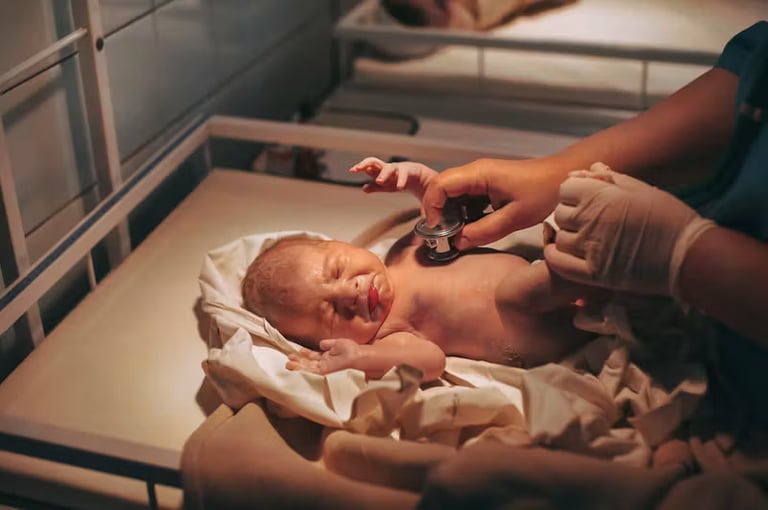

Key collaborators include Wyss Senior Scientist Peter Nguyen and Scientist Sandy Elmehrath, who frame EVs from maternal blood as a window into feto-maternal oxygen dynamics and emphasize a rapidly deployable diagnostic approach for obstetric care.
Wyss Institute has secured an ARPA-H contract worth up to $12 million under the Making Obstetrics Care Smart program to advance intrapartum fetal oxygen monitoring.
Clinical integration will be aided by feedback from clinicians at MGH and Brigham and Women’s Hospital, with Wyss coordinating program activities and guiding regulatory and payer pathways.
Wyss leadership presents the contract as a model of cross-platform collaboration converting cutting-edge biology and engineering into practical tools for maternal and child health.
The project unites four Wyss faculty labs and prominent collaborators, including James Collins as PI, with David Walt, Donald Ingber, and David Mooney, plus clinical advisors Andrea Edlow and Thomas McElrath to develop a molecular diagnostic and a point-of-care device.
The effort integrates extracellular vesicle isolation, on-chip sensing, and advanced analytics across the four Wyss labs led by James Collins and co-PIs.
Leaders frame the initiative as using cross-disciplinary strengths to cut unnecessary cesareans, missed fetal distress, and birth injuries by delivering precise fetal oxygenation data during labor.
Team members will leverage Wyss technologies to isolate extracellular vesicles, deploy a portable detector readout, and engage regulatory and payer pathways to accelerate adoption.
FEMOx—Fetal Extracellular Vesicle Monitoring of Oxygenation—aims to non-invasively detect fetal hypoxia by reading hypoxia-associated microRNAs in placental extracellular vesicles from maternal blood.
The project uses a multi-layer microfluidic chip to isolate placental extracellular vesicles and ambient nucleic acid sensing (INSPECTR) to produce bioluminescent signals interpreted by cloud-based machine learning for labor risk stratification.
FEMOx will quantify microRNAs in maternal-blood extracellular vesicles to reflect fetal oxygen deprivation, generating readouts via bioluminescence from the INSPECTR system.
ARPA-H highlights collaboration with other MOCS awardees and stakeholders to address obstetric challenges more comprehensively.
Summary based on 2 sources
Get a daily email with more Science stories
Sources
GlobeNewswire • Sep 8, 2026
Wyss Awarded ARPA-H Contract to End the Guesswork in Fetal Distress
Wyss Institute • Sep 8, 2026
Wyss Awarded ARPA-H Contract to End the Guesswork in Fetal Distress