AI Uncovers Key Off Switch for Cancer-Linked Cellular Transport Regulator Arf1
September 9, 2026


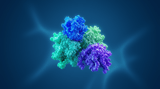
A Cornell research team used artificial intelligence to identify Avl9 as an off switch for Arf1, a key regulator of intracellular transport, revealing a new mechanism for directing materials inside cells.
Through AI and laboratory testing, researchers pinpointed a regulatory off switch for Arf1, uncovering a novel mechanism that controls intracellular transport.
The work highlights how disruptions in this transport regulation can contribute to disease, including cancer, and may guide future studies on related proteins in health and disease.
In human lung cancer cells, Avl9's control of Arf1 influenced cellular movement, linking the molecular mechanism to behaviors relevant to cancer progression.
Specifically, Avl9 mutation reduced cell movement in lung cancer cells, tying the Avl9-Arf1 regulatory axis to cancer growth and metastasis.
A related human DENN-domain protein was shown to regulate Arf1 similarly, suggesting a conserved mechanism across species for intracellular trafficking.
The project was led by Cornell’s Chris Fromme, with NIH funding and support from Cornell’s Institute for Biotechnology Imaging Facility; Ryan Vignogna was the study’s first author.
The study underscores AI’s potential to accelerate discovery by quickly highlighting promising questions for in-depth laboratory validation.
Experiments showed Avl9’s regulation of Arf1 depends on a single amino acid; mutating this residue abolishes Avl9’s regulatory effect.
Additional experiments demonstrated that Avl9 inhibits Arf1 after its transport role is complete, and a single amino acid change in Avl9 disrupts this function.
Published September 9 in the Journal of Cell Biology, the work identifies Avl9 as an off switch that halts Arf1 after its transport duties to prevent disorganization of cellular trafficking.
The findings suggest DENN-domain proteins can act as off switches as well as on switches, indicating a broader, balanced regulatory system for intracellular transport.
Summary based on 2 sources
Get a daily email with more Science stories
Sources
Cornell Chronicle • Sep 9, 2026
AI reveals new class of cellular ‘off switch’ linked to cancer pathways
Fingerlakes1.com • Sep 9, 2026
Cornell AI study finds cellular off switch linked to cancer pathways