Breakthrough in Tubulinopathy Treatment: Suppressor Proteins Offer Hope for Precision Therapeutics
September 11, 2026

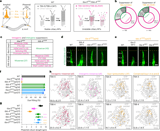
Suppressor proteins Sup II and Sup III are assembly-competent and integrate into microtubules to modulate dynamics, diluting or stabilizing pathogenic tubulin within the microtubule network.
Sup I suppressors work by competitive exclusion, where assembly-defective partner tubulins sequester the pathogenic tubulin to prevent its incorporation into microtubules.
The article provides data availability details, listing PDB entries (7TUB, 6U42, 3J6E) and UniProt IDs (Q19490, P41937, Q71U36, Q9BVA1, P68366, Q3ZCM7) as sources for re-analysed data, with Zenodo access to MDS trajectories and a DOI.
The study used AlphaFold-guided split-GFP labeling, deep learning-based phenotypic classification, and total internal reflection fluorescence microscopy, with data and analysis code publicly deposited for transparency.
Overall, the work shows a conserved, generalizable mechanism by which gain-of-function suppressors neutralize dominant-negative tubulin mutations across species, shifting the view from simple replacement to targeted suppression of the molecular lesion.
Clinically, the findings lay the groundwork for precision therapeutics in dominant tubulinopathies, suggesting allele-specific suppressors could be therapeutic, though delivery, dosage, and safety in vivo remain major hurdles.
The References section cites a broad literature base on tubulin code, tubulin mutations, tubulinopathies, microtubule dynamics, and structural insights, anchoring the study in extensive background work.
Mutational mapping and molecular dynamics show suppressors restore protofilament geometry and lattice contacts near the GTP-binding pocket, re-establishing dynamic instability essential for healthy microtubules.
Remarkably, worm-identified suppressors transferred to human cells to rescue pathogenic defects, and Sup III also rescued meiotic spindle defects in mouse oocytes, outperforming simple wild-type tubulin supplementation.
Forward genetic suppressor screens in Caenorhabditis elegans led by Guangshuo Ou identified mutations that neutralize toxic tubulin variants affecting ciliary microtubules.
Raw microscopy images can be requested from the corresponding author due to size limits, with source data provided alongside the paper.
Molecular dynamics methods and parameters are described in Methods, with custom code for residue-GTP distance calculations and 3D mapping available on Zenodo via two DOIs.
Summary based on 2 sources
Get a daily email with more Science stories
Sources
BIOENGINEER.ORG • Sep 12, 2026
Genetic Suppressors Rescue Tubulin Mutations and Restore Microtubule