New Model Suggests Little Red Dots Are Young, Overmassive Black Holes Formed in Early Universe
September 16, 2026

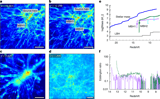
Simulations show surrounding dense gas disks trap radiation, allowing black holes to accrete and grow much faster than in the modern universe, producing brightness and spectra that match the Little Red Dots (LRDs) observed by JWST.
The resulting black holes generate spectra that closely resemble those of LRDs, explaining their mixed traits of quasar-like activity and primordial-star conditions without introducing a new object class.
These rapidly growing black hole seeds align with JWST's LRD observations, offering a plausible explanation for their brightness and spectral features.
JWST’s infrared data complements Hubble’s optical view, revealing structures and stellar populations that are less visible in a single wavelength.
The research is a collaboration among UT Austin, Max Planck Institute for Astronomy, Institute of Science and Technology Austria, and the University of Hawai‘i, among others.
JWST captured the heart of M74, the Phantom Galaxy, about 32 million light-years away in Pisces.
EarthSky’s Kelly Kizer Whitt provides context and background on the ESA release and publication.
Panel 5 highlights a gravitational lensing case where a blue foreground galaxy magnifies and warps a distant orange background galaxy.
The release notes that the image reveals some of the region’s most massive stars still hidden inside dust.
In IC 348, researchers found 39 new brown dwarf candidates, with 15 having spectra, nine confirmed sub-stellar, and the faintest around two Jupiter masses, tightening constraints on brown-dwarf lower mass limits.
Evidence of a surrounding host galaxy helps explain a weaker Balmer break and unusual spectral characteristics for what appeared to be a lone dot.
Panel 3 describes stars and faint outflows on the field’s outskirts, including an embedded orange star and glowing shockwaves from outbursts.
Summary based on 24 sources
Get a daily email with more Science stories
Sources
Nature • Sep 16, 2026
Overmassive black holes and little red dots naturally form in simulations
EurekAlert! • Sep 16, 2026
Japanese supercomputer explains Webb's Little Red Dots
ScienceDaily • Sep 17, 2026
JWST’s mysterious little red dots may be black holes growing at incredible speeds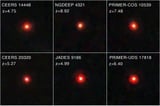
Universe Today • Sep 17, 2026
Little Red Dots Are The Seeds of Quasars and Supermassive Black Holes