New Enzyme AvaS Unveiled: A Potential Game-Changer in Combating Drug-Resistant Bacteria
September 18, 2026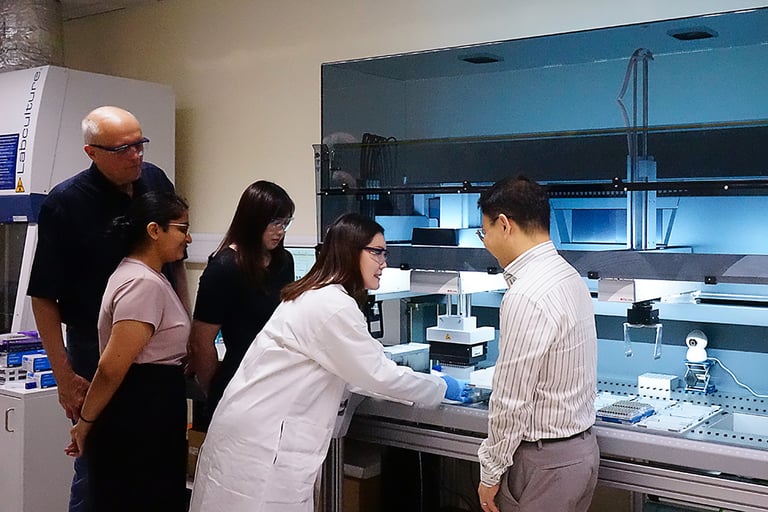

This work introduces PLP-dependent enzymes as a new class of tRNA-modifying enzymes, expanding known bacterial mechanisms for regulating protein production and stress responses.
The discovery broadens our understanding of RNA modification biology, highlighting a novel function for PLP-dependent enzymes with possible implications for antimicrobial resistance and new drug targets.
Researchers identified AvaS, a pyridoxal phosphate (PLP)-dependent enzyme, as the first known enzyme that creates the tRNA modification ava2C (aminovaleramide cytidine) in bacteria.
Using SMART AMR’s high-throughput LC-MS/MS RNA modification profiling, AvaS was found in Pseudomonas aeruginosa and the ava2C modification was confirmed in Acinetobacter baumannii, Vibrio cholerae, and Arabidopsis thaliana.
AvaS converts lysidine (k2C) to ava2C, enabling the formation of the tRNA modification in P. aeruginosa and is also present in the other species identified.
The findings were published in Nature Chemical Biology on September 9, 2026, with funding from Singapore’s National Research Foundation under the CREATE program.
The work showcases SMART AMR’s epitranscriptomics platform for scalable discovery of unknown RNA-modifying enzymes, with potential implications for drug targets, biotechnology, and pharmaceutical research.
By revealing ava2C’s role, the study opens avenues to study bacterial stress responses and metabolism and to explore strategies to disrupt ava2C formation in the fight against drug-resistant bacteria, with possible broader applications in plants and other organisms.
Researchers aim to investigate how ava2C affects bacterial stress responses and metabolism and to explore methods to disrupt this modification to combat drug resistance, while examining whether similar mechanisms exist elsewhere.
The discovery, reported in Nature Chemical Biology, was achieved by screening thousands of P. aeruginosa mutants with high-throughput LC-MS/MS RNA modification profiling.
AvaS-mediated ava2C modification enhances the bacterial ability to read genetic codes, speeding protein production and aiding adaptation to metabolic and oxidative stress, with implications for developing new antimicrobials.
In short, ava2C helps bacteria read codons more efficiently under stress, supporting rapid protein synthesis and resilience against antibiotics.
Summary based on 2 sources
Get a daily email with more Science stories
Sources

MIT News | Massachusetts Institute of Technology • Sep 18, 2026
A new understanding of how enzymes influence bacterial protein production
Mirage News • Sep 18, 2026
Enzyme Role in Bacterial Protein Production Unveiled