Largest Prehistoric Iron Bar Cache Unearthed in Austria, Revealing Iron Age Trade Secrets
September 20, 2026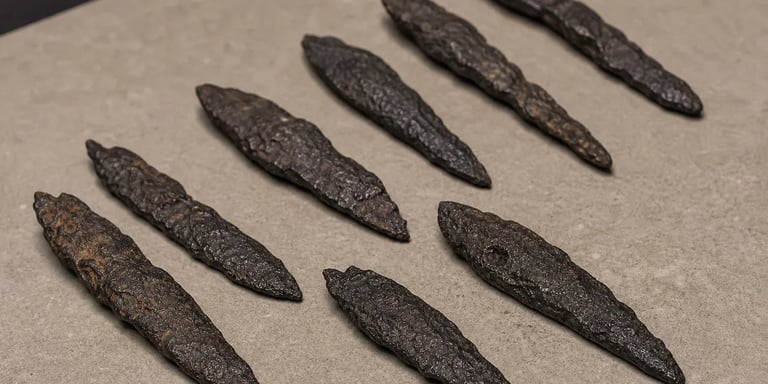


A vast cache of bipyramidal iron bars dating from the Late Iron Age was unearthed along the Danube at Deinham, Austria, weighing about one ton and comprising around 540 fragments, marking Europe’s largest mass find of prehistoric iron bars.
The bars, roughly 28.5 cm long and shaped with a willow-leaf form, were primarily unfinished semi-products intended for later forging into weapons or tools, indicating significant transport and planned processing.
Ongoing analyses aim to identify precise mining origins and determine whether the bars came from a single workshop or multiple centers.
Early assessments suggest the bars could yield about 500 swords or up to 8,000 nails, underscoring the material’s military and industrial value.
Geographic context points to upstream origins in Bavaria (potentially Manching), reflecting long-distance Iron Age trade and suggesting transport routes along the Danube of roughly 125–250 kilometers.
The hoard’s scale implies involvement in broad production networks, with estimates indicating substantial military and trade significance for the surrounding regions.
Scholars question how such a massive iron stock would be paid for—whether through grain, salt, cattle, slaves, or military service—drawing parallels with precious-metal finds from the era.
Radiocarbon dating places the bars in the La Tène period, around the 3rd to 2nd centuries BCE, with discussions about possible origins near Manching, Kelheim, or the Upper Palatinate, though the exact source remains under study.
Accelerator mass spectrometry enables iron dating from small samples, helping researchers trace origins and production centers as analyses continue.
The assemblage comprises 193 complete bars and 307 partial ones, totaling roughly one metric ton, with individual bars weighing 2 to 5 pounds and measuring about 28.5 cm in length.
Researchers emphasize that further work is needed to fully understand production centers, supply chains, and the organizational structure of Iron Age metallurgy and commerce.
Conservation hurdles arose because about one third of the bars were cleaned of gravel by a gravel crusher, while many remain encrusted, complicating removal and study; additional artifacts from various periods were recovered as well.
Summary based on 7 sources
Get a daily email with more Science stories
Sources

Gizmodo • Sep 20, 2026
A Massive, 2,000-Year-Old Iron Haul Could Rewrite What We Know About Ancient Trade
UA.NEWS • Sep 21, 2026
Austria analyzes 500 ancient iron bars from the Danube — Live Science

ScienceAlert • Sep 20, 2026
'Rusty Treasure' in Austria Revealed as Europe's Largest Cache of Iron Age Iron Bars