Groundbreaking Study Maps Gene Activity in Brain: Insights into Aging and Major Disorders
September 23, 2026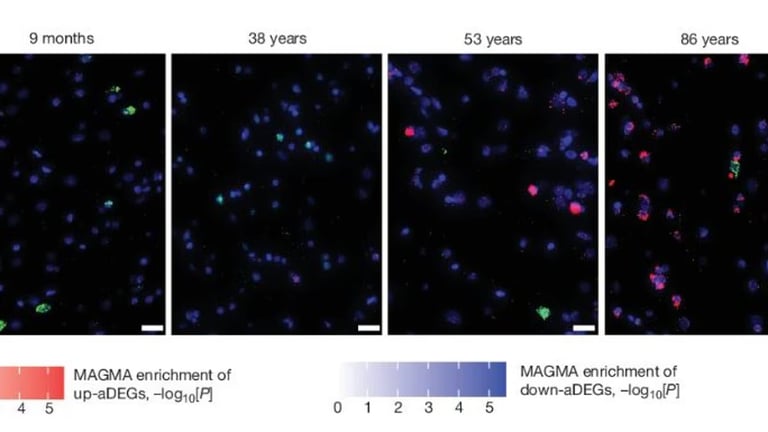

A large, multi-study effort mapped gene activity in the brain’s prefrontal cortex using data from nearly 1,500 deceased donors spanning infancy to 108 years, analyzing over 6.3 million brain cells to illuminate development and major brain disorders.
Across Alzheimer’s, Lewy body disease, vascular dementia, and Parkinson’s, researchers found common pathways in nerve-cell development, neuronal communication, and blood-vessel biology, with shared microglia-related patterns for Alzheimer’s and Parkinson’s.
The study identifies patterns of gene activity that are common across diseases as well as disease-specific patterns, highlighting biological processes and cell populations that could be targeted for treatment.
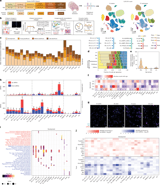
Age explains the largest portion of transcriptional variance during development, with a notable secondary impact in late adulthood, signaling dynamic early-life changes and aging-related shifts.
Lifespan trajectories of cell types follow logarithmic patterns, with log-increasing trends in excitatory neurons, astrocytes, and oligodendrocytes, and log-decreasing trends in interneurons, OPCs, and microglia, reflecting early expansion, stabilization, and late-life changes in glia and certain neurons.
Some cell types exhibit nonlinear gene expression trajectories across aging and disease, implying dynamic roles rather than simple linear changes in progression.
Cell-type resolution boosts discovery of regulatory effects but lowers statistical power; eGene counts vary by cell type and depth, with thousands of eGenes identified in major neuron classes depending on abundance and read depth.
Transcriptional convergence increases with age in excitatory neurons, while convergence in interneurons and glia is more modest; convergent genes tend to be broadly expressed and linked to maintenance, with neuronally enriched convergence tied to adhesion and neurotransmitter transport early in life and DNA repair and immune processing later.
The developmental timeline shows an initial turbulent phase of neurogenesis and gliogenesis before adulthood, a quieter middle period, and a renewed wave of changes around age 60, especially in glia and immune cells.
Fine-mapping of cis-eQTLs yields small credible sets, enabling precise identification of candidate causal variants and their regulatory context.
Open chromatin nearby lead eQTLs aligns with cell-type–specific regulation, with stronger enrichment in glial cells than in neurons.
Cell type accounts for about half of observed transcriptional variation, with substantial individual differences; analysts should avoid treating each nucleus as an independent person.
Summary based on 12 sources
Get a daily email with more Science stories
Sources
Nature • Sep 23, 2026
Lifespan single-cell transcriptomic atlas of the human prefrontal cortex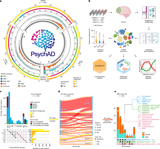
Nature • Sep 23, 2026
Single-cell atlas of transcriptomic vulnerability across brain disorders