Octopuses Redefine Camouflage and Intelligence with Unique Sensory and Neural Powers
September 23, 2026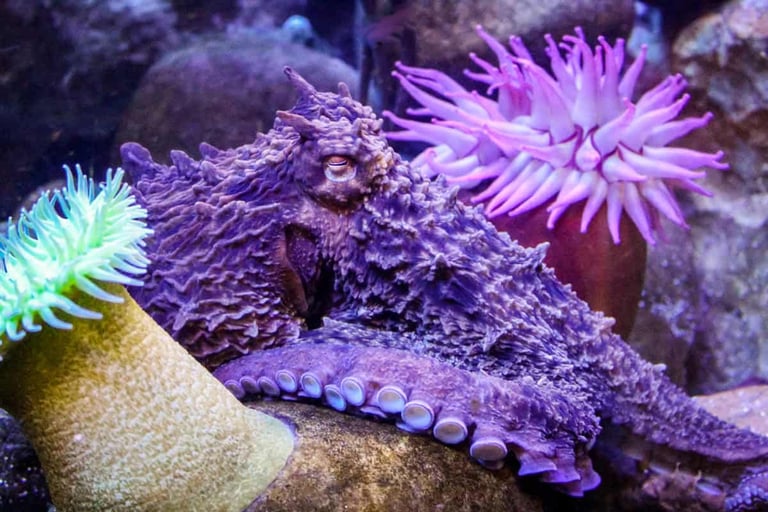

Octopuses may perceive color differently from humans, yet they match their backgrounds with remarkable precision, hinting at unconventional sensory processing.
Camouflage is controlled by the nervous system rather than hormones, enabling rapid, real-time responses to threats and opportunities.
The discussion reflects ongoing debates and a dynamic understanding of perception, learning, and autonomy in cephalopods.
The octopus nervous system is highly decentralized, with more than half of its neurons in the arms, giving each limb substantial perceptual and action autonomy.
Octopuses are shaping a model for redefining animal intelligence through behavioral plasticity and adaptive problem-solving.
Chromatophores and muscular skin textures allow near-instant color and texture changes for camouflage that blends into complex surroundings.
Laboratory studies show octopuses can learn associations, solve problems, open containers, and navigate mazes, though whether they explicitly plan ahead is debated.
Future research aims to uncover the exact sensory mechanisms behind color matching and rapid camouflage, as current understanding remains incomplete.
Summary based on 1 source
Get a daily email with more Science stories
Source
A-Z Animals • Sep 23, 2026
Octopuses Can Disappear Right Before Your Eyes: Here’s The Incredible Science Behind Their Powers