Global Study Links Human Activity to Emerging Infectious Disease Outbreaks: Calls for One Health Approach
September 23, 2026

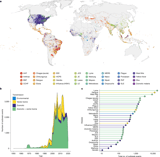
Outbreak drivers are pathogen-specific: vector-borne diseases linked to fragmented landscapes and forest interfaces, while directly transmitted zoonoses like Ebola show fewer shared drivers across pathogens.
Across diseases, climate and environmental predictors are not uniform; directly transmitted infections exhibit multicausal spillover shaped by socioecological systems.
Climate change influences mosquito-borne outbreaks, but its impact varies by disease, with some infections like Ebola and mpox showing less direct climate linkage.
Experts advocate for integrated One Health surveillance and expanded healthcare access in remote regions to improve outbreak detection and prevent larger epidemics.
Independent experts acknowledge the value of large-scale analyses while cautioning that they may overlook finer details such as deforestation effects on risk.
The study was co-led by Sadie Ryan of UF, in collaboration with University College London and Yale University, with UF researchers Catherine Lippi and Jason Blackburn among the team.
The article draws on practical experience from China, including integrated disease management, antimicrobial resistance control, sustainable vector control, food-safety governance, and ecological management.
Limitations include data sparsity, misalignment between infection events and environmental covariates, and residual detection biases that complicate separating true risk from reporting artifacts.
Outbreak risk arises from multiple interacting processes; longitudinal, system-specific ecological studies are needed to refine interventions beyond coarse cross-disease inferences.
Remote regions may underdetect illnesses due to limited access to clinics, laboratories, and diagnostics, leading to underreporting or misclassification.
A bottom-line: greater distance to healthcare correlates with fewer recorded outbreaks, while environmental and land-use changes modulate risk in pathogen-specific ways; improving access to care and diagnostics is essential for accurate surveillance.
The review traces One Health from historical lessons to present challenges, including SARS, COVID-19, vector-borne diseases, antimicrobial resistance, and zoonoses.
Summary based on 5 sources