HERC4: A Crucial Catalyst in TNF-Induced Cell Death and Potential Inflammation Therapy Target
September 28, 2026

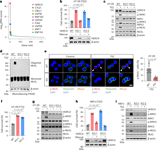
Disruption or catalytic inactivation of HERC4 reduces phosphorylation of RIPK1, RIPK3, and MLKL, blocks MLKL oligomerization and membrane translocation, and protects against TNF-driven necroptosis in human cells and mouse fibroblasts.
HERC4 acts as a key E3 ubiquitin ligase that promotes TNF-induced apoptosis and necroptosis by ubiquitinating RIPK1, enabling its death domain–driven oligomerization and assembly of the signaling complexes that drive cell death.
In mice, loss of HERC4 protects against TNF-induced systemic inflammatory response syndrome and acute liver injury, suggesting HERC4 as a therapeutic target to mitigate TNF-driven inflammation.
HERC4-mediated ubiquitination of RIPK1 enhances its oligomerization and recruitment of FADD–caspase 8 (complex IIa) and RIPK3 (complex IIb), coordinating both apoptosis and necroptosis within TNFR1 signaling.
The study employs CRISPR–Cas9 screens, multiple knockout/knockin cell lines, rescue experiments, in vitro ubiquitination assays, co-immunoprecipitation, advanced imaging, and in vivo models to establish causality and mechanism.
HERC4 adds K63-linked ubiquitin chains to RIPK1 at K627 in humans (K612 in mice), licensing RIPK1 to activate downstream cell death pathways.
Ubiquitination occurs on the RIPK1 death domain and is critical for DD-mediated homo- and hetero-oligomerization, which facilitates formation of the necroptotic and apoptotic signaling complexes.
HERC4’s ligase activity is essential; a catalytically inactive HERC4 mutant can bind RIPK1 but cannot promote ubiquitination or trigger necroptosis or apoptosis, underscoring the need for ubiquitin transfer.
HERC4 physically interacts with RIPK1 in a phosphorylation-dependent manner, preferentially binding RIPK1 that is phosphorylated at S166, a binding that's required for necrosome assembly and signaling.
Summary based on 1 source
Get a daily email with more Science stories
Source
Nature • Sep 28, 2026
HERC4-mediated ubiquitination licenses RIPK1 to initiate TNF-induced cell death