El Niño's Global Impact Intensifies with Climate Change, Altering Weather Patterns Worldwide
September 30, 2026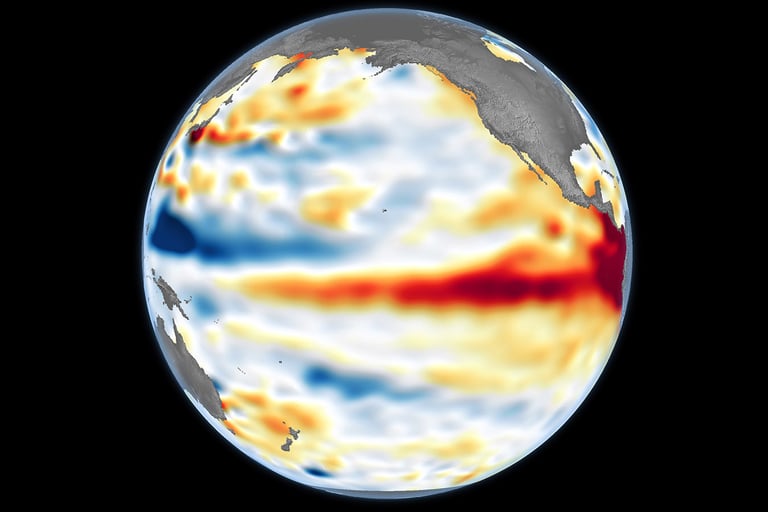

Every two to seven years, disturbances trigger westerly wind bursts that weaken easterly trade winds, allowing warm water to spread across the Pacific via Kelvin waves and signaling El Niño’s approach.
This mechanism interacts with ongoing global warming, with projections indicating significant near-term climate impacts.
Historically, Gilbert Walker identified recurring atmospheric pressure patterns, and Jacob Bjerknes linked Pacific Ocean warming to broad global weather impacts.
Warming strengthens the Pacific temperature contrast, altering the jet stream and potentially bringing more winter storms to the southern U.S. and, occasionally, the UK.
El Niño releases large amounts of heat into the atmosphere, elevating global temperatures and reshaping weather patterns worldwide, including droughts, wildfires, floods, and storms.
The Bjerknes feedback amplifies the cycle by warming surface water, suppressing deep-water upwelling, reducing trade winds, and intensifying warming.
El Niño was named by Peruvian fishers who observed warming waters around Christmastime, affecting anchovy catches.
During El Niño, the Walker circulation shifts eastward with eastern Pacific warming, bringing dry conditions to Indonesia and the Horn of Africa while increasing rainfall in eastern Africa and the Amazon.
Under normal conditions, trade winds push warm water west, creating a warm pool near Indonesia that stores energy like a coiled spring.
Experts note that these atmospheric changes can propagate globally, making El Niño a major climate phenomenon rather than a localized event.
Summary based on 1 source
Get a daily email with more Science stories
Source
New Scientist • Sep 30, 2026
Explainer: What is El Niño?