Breakthrough Surface Labeling Technique Enhances Microbial Capabilities Without Genetic Modification
October 3, 2026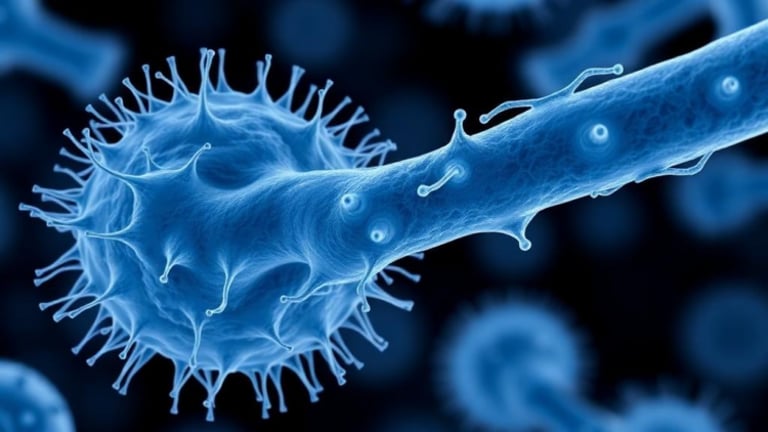

A sulfo-NHS ester-based surface labeling approach increases hydrophilicity and reduces solvent use, preserving viability while enabling visible labeling across a wide range of bacteria, including Gram-positive and Gram-negative species, under aerobic and anaerobic conditions.
A regrowth dynamics assay complements dye-based viability measures, estimating about 88% viability at the highest crosslinker dose and confirming overall cellular health.
There are limitations: empirical optimization is needed for new species, and surface modifications dilute with cell division, making longevity dependent on growth rate and the desired density of surface molecules.
Overall, the study presents a simple, scalable chemical framework for live microbial surface engineering that decouples functional extension from genetic modification and enables non-genetic live therapeutics and controlled microbial communities.
In Escherichia coli, up to roughly 210,000 surface-tethered molecules per cell were achieved at high crosslinker concentrations, with about 91% viability and unchanged growth rates at operational levels.
Compared with prior methods, this approach yields substantially higher labeling densities—up to 110-fold improvement—while avoiding significant viability loss, unlike periodate oxidation or low-efficiency biotin–NHS protocols.
A universal surface functionalization technique attaches high densities of functional molecules to live bacterial surfaces without altering their DNA, using a DBCO–sulfo–NHS crosslinker followed by an azide–alkyne click reaction.
Demonstrations include surface-tethered beta-lactamase providing dose-dependent antibiotic resistance and greater protection than free enzyme, and programmable cell-to-cell adhesion via azide-modified DNA strands enabling self-assembled microbial aggregates.
Validation across six diverse isolates—two aerobic marine Gram-negatives, one anaerobic gut bacterium, and two Gram-positives—showed 60,000 to 250,000 molecules per cell with minimal viability loss.
The technique enables non-genetic, surface-based enhancement of microbial capabilities, with potential for engineered probiotics and synthetic consortia in bioremediation and other applications without genetic modification.
Summary based on 1 source
Get a daily email with more Science stories
Source

BIOENGINEER.ORG • Oct 3, 2026
Chemists Give Living Bacteria New Powers With a Universal Cell-Surface