Revolutionizing mRNA Therapeutics: Understanding Nanoparticle Biodistribution and Protein Expression
October 9, 2026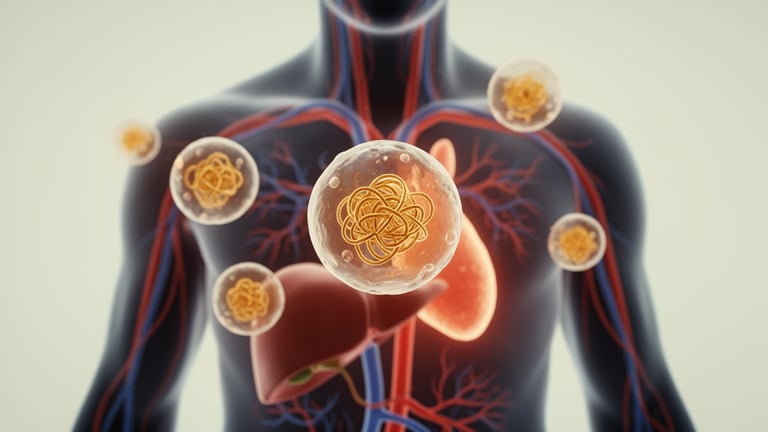

A comprehensive review shows that lipid nanoparticle–encapsulated mRNA distribution, persistence, and functional protein expression are distinct endpoints; each must be evaluated separately to predict efficacy and safety.
Administration route fundamentally shapes biodistribution and kinetics: intramuscular/subcutaneous delivery localizes near the injection site and nearby lymph nodes, intravenous delivery prompts rapid systemic exposure with liver accumulation, and respiratory or intranasal routes enable mucosal and airway-wide distribution respectively.
Clearance patterns reveal mRNA degrades within roughly two days while lipid components linger longer, with PEG-lipids potentially persisting and possibly triggering anti-PEG responses upon repeat dosing; cross-species differences necessitate human-relevant models.
A dynamic protein corona forms in biological fluids, influencing cellular uptake and organ targeting; corona composition depends on lipid chemistry, route, and physiology, meaning similar nanoparticles can behave very differently in vivo.
Endosomal escape is the main intracellular bottleneck; only a subset of internalized nanoparticles release intact mRNA, so even small improvements in escape can disproportionately boost protein expression and shift focus from uptake to intracellular trafficking.
Unconventional delivery routes can yield organ-specific targeting, such as intraperitoneal delivery to pancreatic beta cells via macrophage mediation, pancreas-selective delivery through organ capsule filtration, intrathecal administration for brain-wide distribution, and subretinal injections for localized retinal transfection with less systemic exposure.
In humans, post-intramuscular vaccination, detectable vaccine-derived mRNA and protein appear transiently in plasma and lymph nodes, correlating with immune responses, while systemic presence in brain and gonads is limited and placental targeting is selective with minimal fetal transfer in pregnancy models.
The review calls for data-driven engineering: SORT lipids to redirect expression, biodegradable ionizable lipids to reduce retention, barcode-based high-throughput formulation screening, and AI/ML with PBPK/QSP models to predict tissue exposure and protein expression across species.
The overarching message is that biodistribution, cargo integrity, and functional protein expression are distinct yet interrelated, and must be characterized together to design safer, more effective systemic, repeat-dose mRNA therapeutics.
Summary based on 1 source
Get a daily email with more Science stories
Source
BIOENGINEER.ORG • Oct 9, 2026
Where mRNA Vaccines Really Go: New Review Maps the Journey of Lipid