World's Lightest Wireless Microscope "Airscope" Revolutionizes Neural Imaging in Freely Moving Animals
October 20, 2026

A Chinese research team has developed Airscope, the world’s lightest wireless mesoscopic microscope at about one gram (without battery), enabling high-resolution neural imaging in freely moving animals.
Researchers from Tsinghua University and the Chinese PLA Medical School describe Airscope as the world’s smallest wearable mini brain monitor capable of tracking thousands of neurons simultaneously.
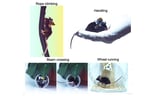
The system demonstrated naturalistic imaging by monitoring cortical activity in multiple mice across a 5-square-meter habitat and during exploration of a large maze with 32 arms, showing systematic variation with terrain.
Airscope is designed to provide a cortex-wide view of neural activity, expanding the range of detectable signals.
Airscope is powered by a magnetically attached, quick-swappable battery, enabling prolonged, continuous observation and natural behaviors like climbing and exploring large environments.
The development was detailed in a paper published in Nature, signaling peer-reviewed validation.
The device can record activity from more than 8,500 cortical neurons in a single mouse—about twenty-five times more than existing wireless devices—and maintain stable recordings from the same brain region for over 200 days with benchtop-like quality.
Airscope features a 2-megapixel sensor and a minimalist four-lens optical system achieving single-cell resolution (4–6 micrometers) over a 6-millimeter field of view, with wireless transmission via data compression.
Dai Qionghai of Tsinghua University noted that this microscope will advance optical brain-computer interfaces by enabling more precise neural detection.
The team emphasizes Airscope’s lightweight, fully wireless design, wide field of view, and high-throughput capability, addressing the limitations of traditional and other wireless microscopes that constrain movement or scope.
Potential applications include neuroscience research and brain-computer interfaces, with future extensions into immunology and oncology for tracking disease progression, as outlined by study leaders Dai Qionghai, Dai Pu, Wu Jiamin, and Zhang Yuanlong.
Weighing about one gram (0.35 oz) and wireless, Airscope enables untethered tracking of brain activity in laboratory animals.
Summary based on 2 sources
Get a daily email with more Science stories
Sources

South China Morning Post • Oct 21, 2026
China builds the world’s smallest wearable brain monitor with a cortex-wide view