Breakthrough Atlas Maps Early Human Organ Development with Transcriptomic and Metabolomic Insights
October 20, 2026

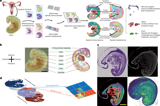
A comprehensive, spatially resolved atlas of early human organogenesis at Carnegie stage 12 links anatomy with transcriptomic and metabolomic landscapes, offering a resource for developmental biology while noting generalizability and need for functional validation.
This work establishes a pioneering spatial multi-omics framework for CS12, enabling exploration of how transcriptional programs and metabolic cues coordinate to shape developing tissues.
In the hepatic lineage, five hepatoblast-related subpopulations emerge, including hepatocyte-like cells and hepatobiliary hybrid progenitors, with NOTCH signaling suggested by computational analyses.
Hepatic primordium at CS12 expresses hepatoblast markers (AFP, ALB, HNF4A) across five subpopulations, while liver mesenchyme shows HGF and NOTCH targets, indicating hepatocyte- and cholangiocyte-lineage priming and paracrine signaling during hepatogenesis initiation.
Spatial transcriptomics identifies 17 distinct tissue clusters, with robust annotations for hepatoblasts, cardiac regions, erythrocytes, macrophages, mesenchyme, endothelium, epidermis, fibroblasts, neural lineages, floor plate, Schwann cell precursors, and otic placode.
Metabolomic data reveal biochemical environments and gradients that accompany transcriptional domains, including lipid metabolism patterns in liver and neural regions, though RNA domains are more discrete.
Skeletal muscle development proceeds through four states from dermomyotome progenitors to migratory and differentiating myogenic populations, with RNA-velocity supporting trajectory inferences.
The neural atlas details a closed neural tube with a floor plate enriched for SHH signaling and ventral-patterning markers, plus connectivity to neural progenitors and mapping of peripheral Schwann-cell precursors and otic placode markers.
Methodologically, the study uses Stereo-seq for spatial transcriptomics, MALDI-MSI for metabolomics, CNV profiling to confirm embryo normalcy, FISH/IF for validation, and reference mapping to a second organogenesis atlas for robustness.
Metabolite patterns align with cardiac gene programs, indicating metabolic readiness and regional energy strategies, with signals for fatty-acid transport and observing bile-acid and glutathione metabolism.
Spatial metabolomics reveals differential distributions of fatty acids and amino acids, DHA enrichment, lipid metabolism gene signatures, and GSH-related detox pathways indicative of redox buffering in early liver development.
Regulatory insights include SCENIC-detected transcription factors like CEBPA and NR1H4 in hepatic domains, along with CellChat analyses highlighting SHH signaling from the floor plate and its role in neural patterning.
Summary based on 2 sources
Get a daily email with more Science stories
Sources

BIOENGINEER.ORG • Oct 20, 2026
Single-embryo spatial multi-omic atlas maps Carnegie stage 12 organogenesis