FAM50A: Key Oncogenic Splicing Factor in ESCC, Potential Target for Combination Therapy with Rifabutin
October 20, 2026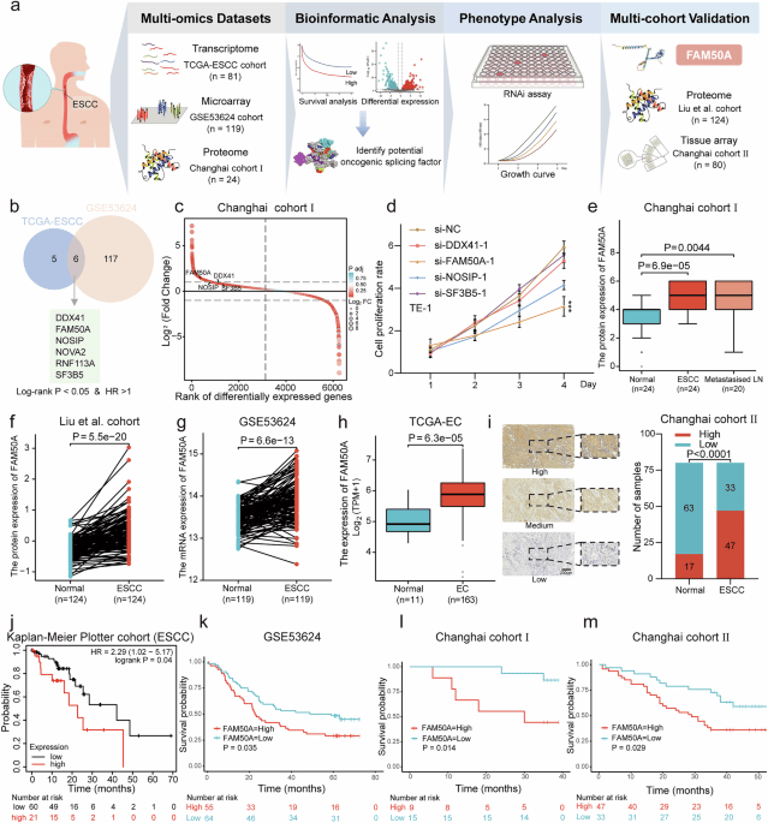

Direct binding of FAM50A to SDK1 intron 1 promotes circSDK1 biogenesis, and circSDK1 in turn amplifies FAM50A-driven oncogenic effects by activating MAPK/FAK signaling and boosting EMT and anoikis resistance in ESCC.
FAM50A emerges as a pivotal oncogenic splicing factor in ESCC, linking splicing regulation to MAPK/FAK-driven tumor progression via circSDK1 and marking it as a potential therapeutic target.
FAM50A activates MAPK and FAK signaling, strengthens cell–extracellular matrix adhesion, and promotes EMT, collectively fueling ESCC progression.
Inhibitors targeting FAM50A, including rifabutin, were identified and show a synergistic effect with cisplatin, suggesting a potential combination therapy strategy.
FAM50A is upregulated in ESCC and associates with poorer prognosis across multiple cohorts and tissue samples.
Functional studies show FAM50A drives malignant ESCC phenotypes such as increased proliferation, migration, invasion, and tumor growth, while knockdown reduces these traits and enhances anoikis.
Rescue experiments indicate circSDK1 overexpression can compensate for FAM50A knockdown, restoring proliferation, migration, adhesion, and MAPK/FAK activation; conversely, circSDK1 knockdown blunts FAM50A-driven effects.
FAM50A binds spliceosomal components and directly interacts with RNA, regulating canonical alternative splicing and backsplicing to generate circRNA products.
RIP-seq and proteomic analyses identify FAM50A as a spliceosome-associated RNA-binding protein with genome-wide binding, notably affecting specific AS events such as inclusion of CRTC1 exon 3.
Summary based on 1 source