Study Reveals Comets Unlikely Source for Early Earth's Life-Building Blocks
October 28, 2026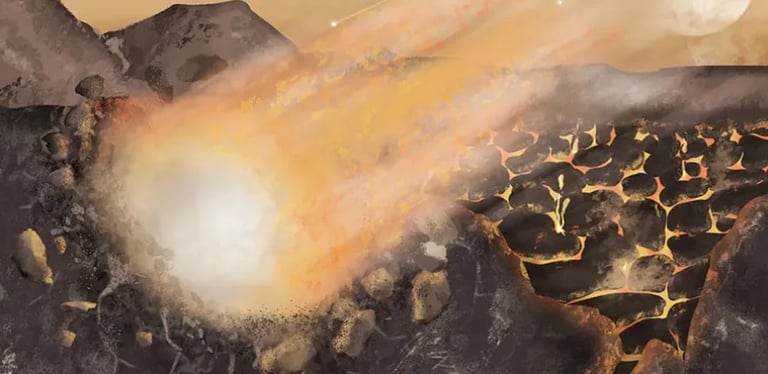

The study finds that comets are unlikely to provide a steady supply of the building blocks for life to early Earth, with most deliveries failing to survive atmospheric entry or high-speed impacts.
Even surviving hydrogen cyanide would be diluted too quickly by ocean impacts, hindering the chemical reactions needed for prebiotic chemistry.
These findings push the RNA World discussion toward Earth’s own atmospheric chemistry, suggesting endogenous origins may have been more important than previously thought and revising the balance between exogenous and endogenous sources.
The article also notes related Digital Trends tech-news items within the same collection, including robot dogs and AI-security topics.
The results may shift focus to other sources of organic molecules and encourage replication studies and testing, including examination of carbonaceous chondrites.
Findings could influence future searches for life in other solar systems by identifying environments where comets might deliver organics and guiding expectations for missions after the JWST era.
The researchers built on a 2023 hypothesis that gravitational encounters with planets could slow comets and tested this in the solar system with combined comet evolution and atmospheric-entry models.
They estimate only comets wider than about 300 feet could reach early Earth intact, and that earlier estimates overstate HCN survival during high-speed collisions.
Context includes prior work on cometary chemistry, iSALE simulations of HCN survival, and asteroid Bennu analyses showing amino acids and nucleobases, underscoring a shift toward terrestrial-synthesis pathways and asteroid-delivery as plausible contributors.
The study concludes that the frequency and efficiency of delivering usable HCN from short-period comets were too low, with many smaller comets breaking apart and most material destroyed during atmospheric entry.
A Scientific Reports study led by Dr. Richard Anslow argues that cometary delivery of prebiotic feedstock to early Earth is highly unlikely due to destructive hypervelocity impacts and insufficient surviving material.
Computer simulations indicate most comets would destroy prebiotic molecules like HCN on impact, making comet-delivery of life's building blocks unlikely, even when considering hydrothermal crater environments.
Summary based on 6 sources
Get a daily email with more Science stories
Sources

Mashable • Oct 28, 2026
Did comets bring life to Earth? New Cambridge study weighs in
Digital Trends • Oct 28, 2026
Comets carried life’s building blocks, but getting them to Earth was another story
Science News • Oct 28, 2026
Comets probably didn’t deliver life’s building blocks to Earth
Universe Today • Oct 28, 2026
Ancient Comets Carried Organic Compounds, But They Didn't Survive Crashing Into Earth