SMARCA5-Cohesin Axis: Key to Genome Integrity and Cancer Therapy Potential
October 28, 2026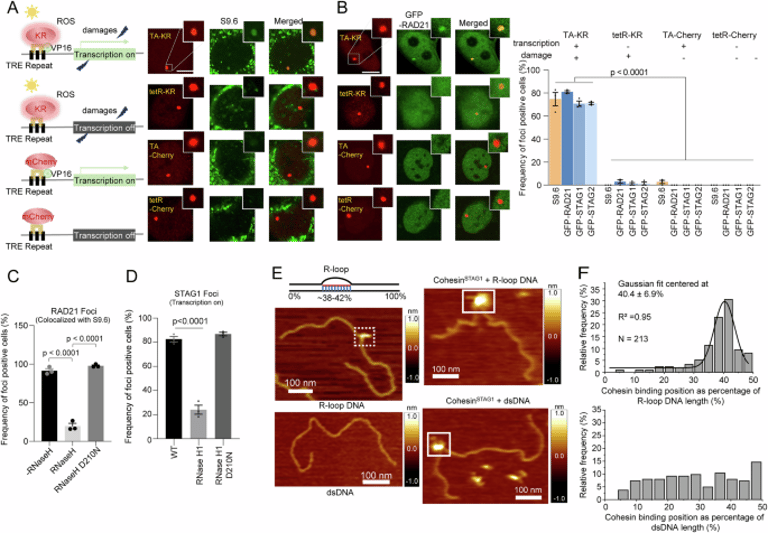

The Smarca5-cohesin axis promotes RAD51-dependent transcription-coupled homologous recombination (TC-HR) at R-loop sites, and knockdowns of SMARCA5 or RAD21 reduce TC-HR efficiency, indicating they act in the same pathway to facilitate TC-HR.
RAD51 recruitment to TA-KR sites drops when RAD21, STAG1, STAG2, or SMARCA5 are knocked down, linking cohesin and SMARCA5 to the DNA repair machinery at R-loops.
ISWI remodelers, especially SMARCA5 and its partner ACF1, promote cohesin recruitment to R-loops, with SMARCA5 knockdown reducing RAD21 localization at TA-KR sites.
Overall, the study shows a coordinated SMARCA5-cohesin pathway that safeguards genome integrity at transcription-replication interfaces and could inform cancer therapies targeting this axis.
SMARCA5 and RAD21/STAG1 are upregulated in several cancers and correlate with poorer glioma survival; their depletion reduces cancer cell clonogenic growth, suggesting a cancer-relevant functional link.
Depletion of SMARCA5 or cohesin subunits impairs R-loop processing, sustains transcription-replication conflicts, elevates replication stress, and drives genome instability, highlighting their role in maintaining genome integrity during transcription-associated DNA damage.
SMARCA5 directly binds R-loops in vitro, with AFM data showing SMARCA5 associates with RNA-DNA hybrid regions of R-loops.
Cohesin STAG1 preferentially binds to R-loop structures on DNA in vitro, supporting direct interaction with R-loops beyond cellular context.
RAD21 is required for STAG1 recruitment to transcription-associated damage sites, indicating cohesin integrity underpins proper localization, while NIPBL is not required for STAG1 recruitment at these sites.
Core cohesin subunits RAD21, STAG1, and STAG2 localize to DNA damage-induced R-loops in transcriptionally active regions, and this recruitment depends on the presence of R-loops rather than transcription alone.
Summary based on 1 source