$3M Grant Fuels Xiphophorus Fish Research to Unlock Human Disease Insights
October 29, 2026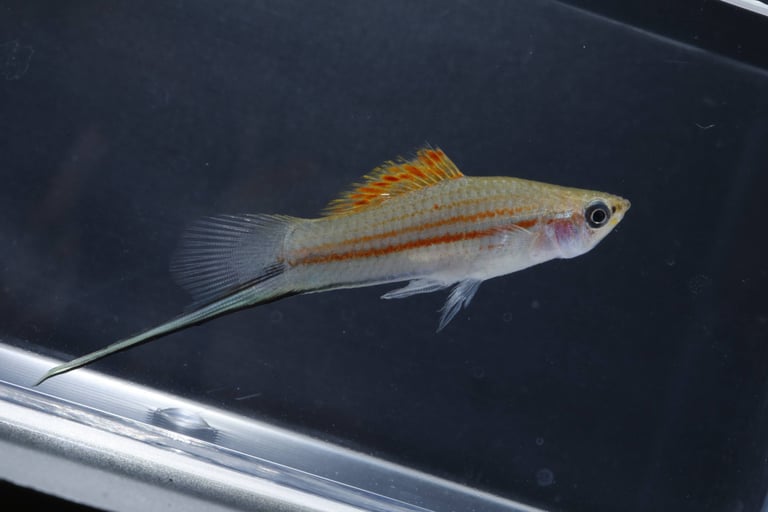

The project Advancement of the Xiphophorus Model for Studying Disease will standardize data about the Xiphophorus fish—its genes and traits—and link this information to public research platforms to accelerate discovery.
Texas State University geneticists Yuan Lu and Manfred Schartl have secured a $3 million NIH grant to advance the Xiphophorus fish model for studying human disease.
TXST houses 24 of the 26 known Xiphophorus species and provides fish and research materials to scientists worldwide through the Institute for Molecular Life Sciences (IMLS).
Collaborative partners include the University of Missouri, UT Health San Antonio, the University of North Carolina at Chapel Hill, and Lawrence Berkeley National Laboratory, connecting findings to broader human disease research.
The work will focus on neurodegenerative, metabolic, cancer-related, and developmental disease traits observed in the fish, leveraging natural genetic differences that mirror human diseases.
Lu emphasizes that studying why some fish remain healthy despite disease-like traits could reveal new paths for disease resilience and discovery.
The initiative will provide TXST undergraduate and graduate students with hands-on lab and computational research opportunities, including data analysis and contributing to scholarly publications.
Researchers will develop laboratory-grown cell models and genetic tools to study specific genes in cells and living fish, aiming to make the model more accessible to scientists.
The project may extend to other animal models such as blind cavefish, axolotls, sticklebacks, and naked mole rats, expanding research avenues for human disease.
Summary based on 1 source
Get a daily email with more Science stories
Source
Texas State University • Oct 29, 2026
TXST geneticists secure $3 million NIH grant to advance fish model for human disease research