Groundbreaking Whole-Body Atlas Maps Cells and Genes, Unlocking Regenerative Secrets in Danionella
October 29, 2026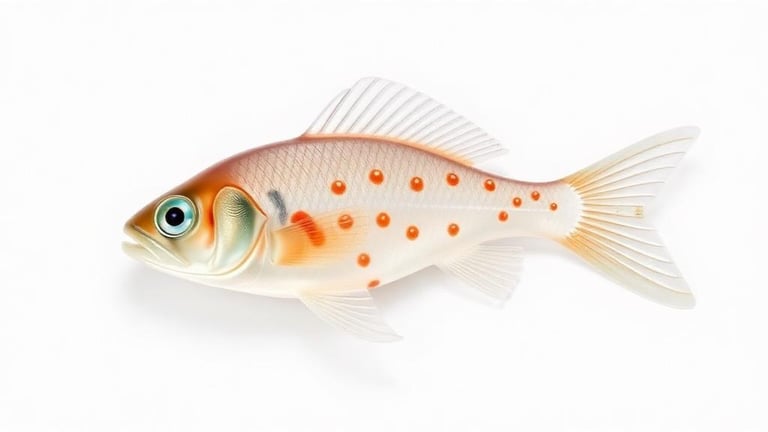

A first-of-its-kind whole-body single-cell atlas maps cell types and gene activity with spatial context, linking molecular data to tissue locations and enabling studies of injury, aging, drugs, and regeneration across the entire organism.
The atlas analyzes over 600,000 cells across brain, spinal cord, eyes, internal organs, fins, head, and trunk, integrating single-cell RNA sequencing with spatial mapping to localize cell types within tissues.
It supports cross-tissue comparisons and tracks cellular changes during brain regeneration, providing a comprehensive reference at single-cell resolution.
Neural cells cluster mainly by regional or developmental origin rather than neurotransmitter identity, with glutamatergic neurons showing strong regional signatures.
Pseudotime analysis predicts gene expression trajectories for glutamatergic neuron differentiation across brain regions in both normal conditions and during telencephalon regeneration.
Danionella cerebrum, about 12 mm long with around 650,000 neurons in 0.6 cubic millimeters, offers unprecedented optical transparency for noninvasive, live, single-cell resolution whole-body imaging.
Neurons from the same region tend to share similar gene activity patterns across different neurotransmitters, highlighting regional and developmental identity as a key organizing feature.
Comparative analyses reveal paedomorphic features in Danionella, with adult tissues retaining larval-like cell-type features.
Adult cells show persistent, region-specific gene programs (molecular memory), with fibroblasts maintaining development-related activity and fin cells retaining limb-patterning signals, suggesting roles in maintenance or regeneration.
The dataset is publicly available, with downloadable data and code to empower researchers to perform their own analyses.
The atlas is used to study Danionella’s regenerative capacity, tracing telencephalon injury from immune response to neural stem-cell activity and neuron formation.
Recovery of rare cell populations demonstrates near-saturation coverage of cell types across the whole organism, including neuropeptidergic neurons.
Summary based on 5 sources
Get a daily email with more Science stories
Sources
Science • Oct 29, 2026
Whole-body single-cell atlas of an adult vertebrate, Danionella cerebrum
GEN - Genetic Engineering and Biotechnology News • Oct 29, 2026
First Whole-Body Single-Cell Atlas of Adult Vertebrate Generated in Danionella cerebrum

EurekAlert! • Oct 29, 2026
Researchers create first whole-body single-cell atlas of an adult vertebrate