Breakthrough Cancer Drug Targets TNKS2, Sparing Healthy Cells: Study Reveals Promising Selective Inhibition
November 2, 2026

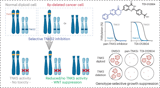
A Weill Cornell Medicine-led study reports the discovery of a TNKS2-selective inhibitor that suppresses TNKS2 activity about 30-fold more than TNKS1, effectively dampening WNT signaling in cancer cells with TNKS1 loss while sparing normal cells in preclinical tests.
The approach leverages a therapeutic vulnerability: tumors with deletions of TNKS1 become dependent on TNKS2, which the selective inhibitor exploits.
The research identifies a common WNT-signaling vulnerability across multiple cancers, enabling selective targeting with potentially low side effects, and is outlined in a Nature Chemical Biology publication dated November 2, 2026.
The article is linked to Nature Neuroscience family journals, with DOI details and a press-style summary shared on LinkedIn by Luke Dow.
Cryo-EM reveals TDI-012804 occupying both the nicotinamide donor site and the acceptor site of TNKS2; a B-loop dynamic, centered on residue L1136, underpins TNKS2 selectivity over TNKS1.
Crystal structures and cryo-EM data show the selectivity mechanism: targeting TNKS2-specific B-loop dynamics and extending ligands into the acceptor site yields TNKS2-selective inhibition.
Support from the National Cancer Institute and the Tri-Institutional Therapeutics Discovery Institute aided the Nature Chemical Biology publication, issued on November 2, 2026.
The study, with multiple institutional collaborations, underscores the potential of a tumor-restricted WNT suppression strategy and outlines next steps for preclinical development.
A next-generation compound with improved drug-like properties is planned to advance through further preclinical testing toward potential clinical trials if results stay favorable.
Future work includes optimizing drug-like properties and progressing toward full preclinical studies and possible clinical evaluation.
The team intends to develop improved TNKS2 inhibitors and, contingent on successful preclinical results, move toward clinical studies.
Mutational validation shows L1136Y substitution in TNKS2 reduces potency of the inhibitor, while Y1289L in TNKS1 increases sensitivity, supporting the proposed selectivity mechanism.
Summary based on 6 sources
Get a daily email with more Science stories
Sources
Nature • Nov 2, 2026
A selective TNKS2 inhibitor for tumor-restricted WNT suppression
Oncodaily - Oncology News, Insights, Stories • Nov 3, 2026
Luke Dow Highlights a New Research Publication Developed Through Collaboration with Weill Cornell Medicine
News-Medical • Nov 2, 2026
New strategy exploits a hidden genetic vulnerability in multiple cancers
Mirage News • Nov 2, 2026
New Strategy Targets Common Cancer Driver With Fewer Side Effects