UCLA Pioneers Scalable CRISPR Therapy for Sickle Cell Disease, Moves Towards Clinical Trials
November 4, 2026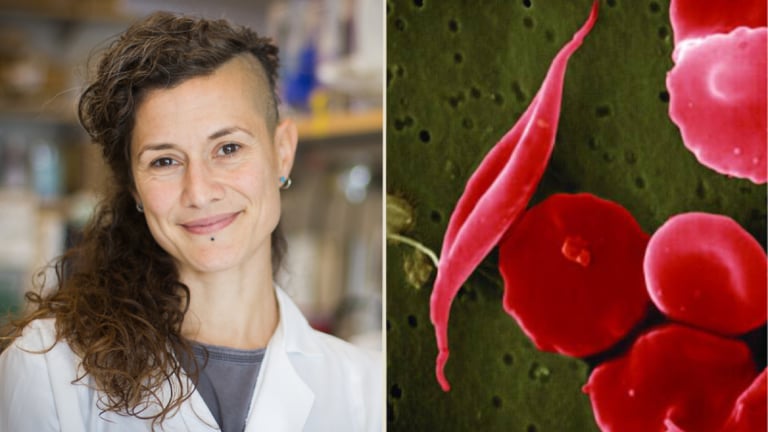

A UCLA-led team has advanced a CRISPR-Cas9 approach to directly correct the sickle cell mutation in a patient’s own hematopoietic stem cells, developing a scalable manufacturing process for clinical use.
The therapy uses a nonviral DNA template and electrical pulses to deliver CRISPR-Cas9 and corrective DNA into cultured blood-forming stem cells, enabling durable gene correction before they differentiate into red blood cells.
In preclinical work, the edited cells, when differentiated into red blood cells, show reduced sickle hemoglobin and higher levels of healthy adult and fetal hemoglobin in vitro.
Disclosures note that several authors are inventors on a related patent application and that Walters serves as a scientific advisor to Ensoma Inc., with research supported by the California Institute for Regenerative Medicine and NIH.
In mice, engrafted edited cells remained stable for 16 weeks with consistent corrected gene copies and no notable treatment-related toxicity or abnormal tissue changes, supporting preclinical safety.
Scale-up manufacturing demonstrated across seven runs, including four at full clinical scale, achieving high stem cell purity and viability with successful correction.
The large-scale process employed a two-day culture of collected stem cells followed by electroporation to deliver CRISPR components, meeting quality requirements across all runs.
UCLA has implemented the process to produce products for two participants in a phase 1 trial led by Dr. Mark Walters at UCSF Benioff Children’s Hospital Oakland, evaluating safety, efficacy, and persistence of corrected cells.
The study, published in Molecular Therapy, lists Zulema Romero Garcia as corresponding author with multiple UCLA-coauthors, some of whom hold patent interests related to this work.
The research underscores the potential impact for sickle cell disease, a condition disproportionately affecting African Americans, and highlights the broader push to move gene-editing therapies from the lab into clinics.
Preclinical data show edited stem cells produce red blood cells with less sickle hemoglobin and more healthy hemoglobin, indicating functional correction and durability prior to clinical testing.
Summary based on 3 sources
Get a daily email with more Science stories
Sources

News-Medical • Nov 5, 2026
UCLA advances CRISPR gene-editing therapy for sickle cell disease
UCLA Health • Nov 4, 2026
How a CRISPR sickle cell therapy moved from lab to clinical trial
Mirage News • Nov 4, 2026
CRISPR Sickle Cell Therapy Moves From Lab to Clinical Trial