Ancient Art Unearthed: Rare Paleolithic Engravings Discovered in Catalonia Cave
November 5, 2026

A Paleolithic engravings assemblage of 280 motifs, including 55 animal figures and 40 parallel lines, was discovered at Cova de la Font Major in Catalonia, dating to at least 19,000 years ago, with occupation layers spanning roughly 26,000 to 41,000 years ago.
The find fills a regional gap in western Europe’s Paleolithic art distribution and solidifies the site as a significant painting tradition location even at long-visited sites.
Cova de la Font Major remains closed to the public due to fragile walls, but the discovery raises the possibility of uncovering more Paleolithic art hidden behind sediment-blocked entrances and galleries in NE Iberia.
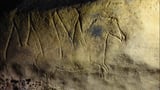
Among the discoveries is a hind deer scene where a natural fissure seems to form a water feature, potentially making it one of the earliest depictions of water in human art.
The engravings were found accidentally when researchers noticed older lines beneath modern graffiti in a side cave, revealing a hidden gallery overlooked by visitors.
Researchers say the markings went unnoticed largely due to lighting and the prevalence of modern graffiti, which obscured the prehistoric lines.
Archaeologist Josep Maria Vergès found the engravings while examining a side gallery previously overlooked, using raking light to reveal incised lines beneath graffiti.
Northeastern Iberia now stands out as hosting high-quality Paleolithic rock art, contributing to a broader Mediterranean graphic tradition distinct from the Franco-Cantabrian region.
Non-figurative engravings include parallel lines, Y-shaped signs, and circular or semicircular shapes, though their meanings remain uncertain and not fossilised.
The site’s large assemblage and high-quality animal figures, such as a bear with ears forward and mouth open, distinguish it from other regional rock art that typically shows fewer drawings.
Cova de la Font Major west of Barcelona is one of the Iberian coast’s richest archaeological finds, containing hundreds of engravings and dozens of animal images.
Archaeologists Josep Maria Vergès and Míriam Salas-Altès confirmed the engravings are prehistoric through stylistic features, chemical analyses, and radiocarbon dating, with results published in Antiquity.
Summary based on 2 sources
Get a daily email with more Science stories
Sources
New Scientist • Nov 5, 2026
Stunning collection of prehistoric engravings found in Spanish cave