Remote Marshall Islands Atolls Reveal Rarely Intact Ocean Ecosystems
November 11, 2026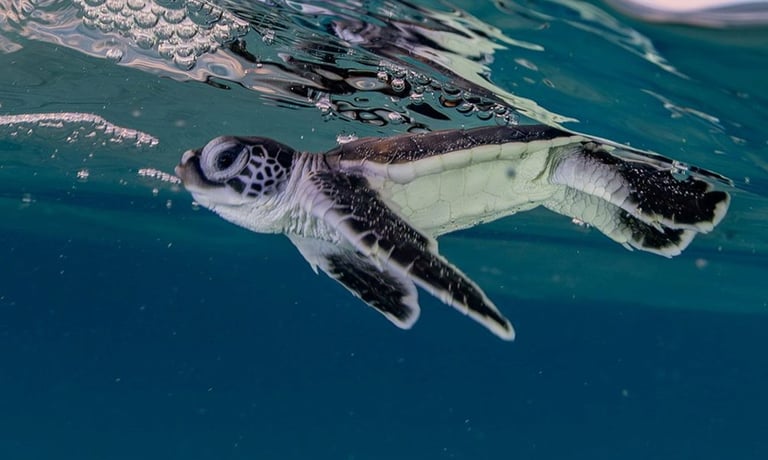

A 2026 study finds that Bikar and Bokak, two remote coral atolls in the Marshall Islands, support ecosystems among the region’s most intact and possibly among the world’s last relatively undisturbed ocean environments.
During a 2023 expedition, researchers surveyed wildlife across land, sea and sky, using dives, cameras and a submersible; the findings were published in Frontiers in Marine Science.
The team documented rich biodiversity, including 17 seabird species, 15 colonies confirmed or suspected to be breeding, and diverse reef, deep-water and open-ocean fish; 14 fish groups had not previously been recorded in the Marshall Islands, and two may be new to science.
The atolls also host distinctive wildlife such as zebra-striped giant clams, bumphead parrotfish and green sea turtles.
The two atolls have different ecological profiles: Bikar had 132 green sea turtle nest pits and more kinds of algae, while Bokak had greater reef-fish biomass and coral-dominated reefs.
Researchers recorded 266 reef-fish taxa from 38 families, with sharks accounting for 26.8 percent of fore-reef biomass at Bikar and 33.9 percent at Bokak.
The survey offers an ecological baseline but captures only one point in time, so it cannot explain the differences; possible factors include lagoon size, water exchange, sediment movement, habitat structure, nutrients and ecological history.
Despite their relative intactness, both atolls had introduced Polynesian rats and remain exposed to warming, coral bleaching and ocean acidification.
In 2025, the Marshall Islands designated about 48,000 square kilometers around the atolls as its first national marine sanctuary, following the community-led Reimaanlok conservation framework.
Researchers describe the atolls as valuable reference ecosystems for understanding what has been lost elsewhere and guiding conservation and restoration, while cautioning that “relatively intact” does not mean pristine or unaffected.
They recommend monitoring entire ecosystems rather than shallow reefs alone and studying nutrient transfer and connections among habitats.
The article contrasts Bokak with nearby Bikini Atoll, where mid-20th-century US nuclear tests destroyed islands and left radioactive contamination; expedition members reported extensive dead and pulverized reef there.
Summary based on 5 sources
Get a daily email with more Science stories
Sources
ScienceAlert • Nov 11, 2026
Scientists Discover Two Remarkably Untouched Worlds Hidden in The Pacific
Talker • Nov 11, 2026
Scientists find ‘last wild and healthy ecosystems’ left on planet