Paper Wasps’ Face-Reading Neurons Reveal a Surprisingly Sophisticated Social Brain
November 23, 2026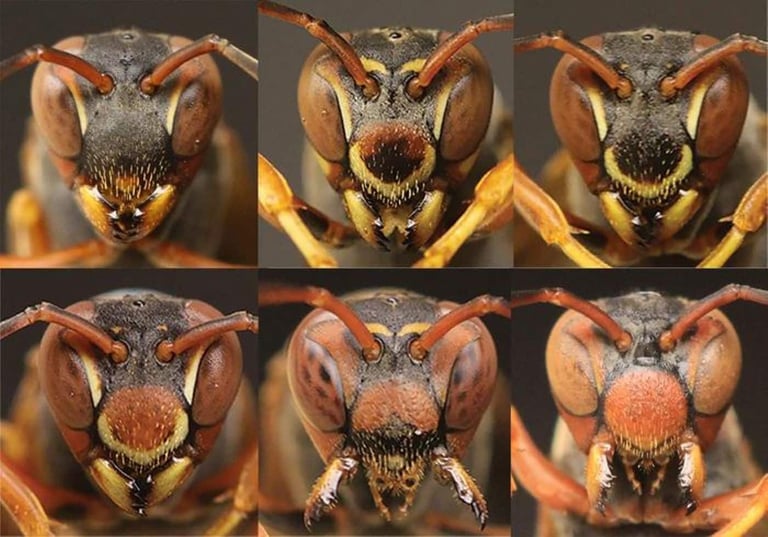

Researchers at Wake Forest University and Cornell University identified neurons in northern paper wasps that respond to other wasps’ faces and appear to encode facial patterns linked to individual identity.
The study, led by Christopher Jernigan and published in Cell, is the first to describe these face-responsive neurons in wasps; identity appears to be encoded by groups of neurons with different tuning preferences, a strategy that may resemble face processing in primates despite the groups’ independent evolution.
Female northern paper wasps use distinctive facial markings to recognize nestmates and remember their place in the dominance hierarchy, helping preserve social order without repeated fights.
Wasps also learn by watching: after observing a fight between unfamiliar individuals, they can later treat the winner differently from the loser.
Because wasp brains are much smaller and their neural circuitry relatively simple, researchers see the insects as a useful model for studying how social experience and neural connections shape visual recognition.
The researchers hope this work will offer insights into how identity recognition operates in human brains, and plan to investigate whether wasps can recognize facial expressions.
Summary based on 4 sources
Get a daily email with more Science stories
Sources
Phys.org • Nov 23, 2026
Specialized brain cells help wasps recognize other wasp faces
Popular Science • Nov 23, 2026
Wasps recognize faces—and it keeps them from killing each other
Newswise • Nov 23, 2026
Specialized brain cells help wasps recognize other wasp faces | Newswise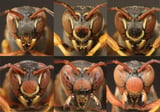
Neuroscience News • Nov 23, 2026
Rice-Sized Wasp Brains Recognize Faces Just Like Humans