Burmese Pythons Spread Beyond the Everglades as Florida Deploys Robotic Rabbits
November 25, 2026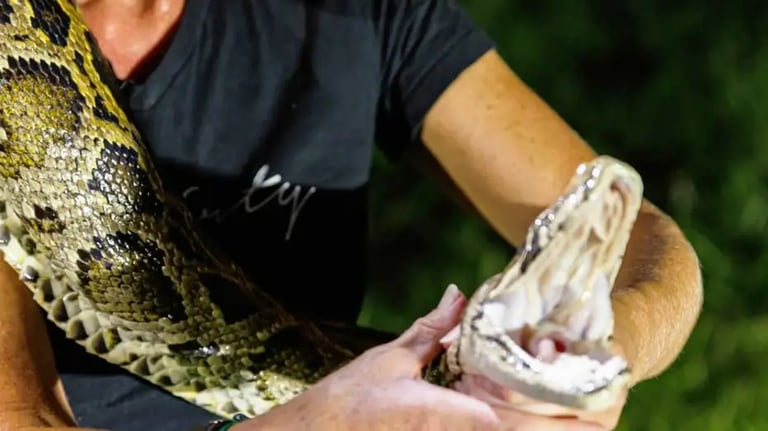


More than 23,000 Burmese pythons have been removed from Florida, yet conservative estimates suggest tens of thousands remain in the Greater Everglades, where the invasive snakes are exceptionally hard to find.
Their camouflage and long periods of inactivity—reportedly motionless about 85% of the time—make population counts and control efforts difficult, while their high reproduction rate adds to the challenge.
After altering South Florida’s ecosystem for more than 25 years, Burmese pythons are now appearing farther north than expected, using gopher tortoise and armadillo burrows to shelter from cold and sometimes breed.
Sightings have been reported near Brevard County, Orlando and Charlotte County, and Amy Siewe said the Brevard and Charlotte populations are thought to have originated from separate releases rather than a continuous spread from the Everglades.
UF/IFAS confirmed an established population in Charlotte in late October 2026, while the Florida Fish and Wildlife Conservation Commission suspects escaped or released captive snakes may have founded the colony.
The pythons prey on a wide range of native wildlife, including mammals, birds, reptiles and alligators; invaded areas have seen major declines in raccoons, opossums and bobcats, as well as local losses of rabbits and foxes.
The loss of prey may also increase pressure on native predators such as the endangered Florida panther, and the snakes have introduced an Asian lungworm that harms native Florida snakes.
Siewe says pythons have consumed 98% of mammals in parts of the Everglades, though the full long-term effects on the ecosystem remain unknown.
To improve control efforts, University of Florida researchers began deploying about 90 robotic rabbits in September 2026, using prey-like heat, scents, movements and vibrations to lure snakes; researchers hope the approach can help target newly detected populations.
Cold can still be deadly to the snakes: a 2011 USGS study found that nine of ten radio-tracked pythons died during a severe South Florida cold wave in January 2010, although burrows may help some survive colder nights.
Researchers emphasize early detection and public education because eradication becomes extremely difficult once pythons are breeding, and preventing further releases of captive snakes is a priority.
Florida also runs the annual Python Challenge: in August 2026, 907 participants removed 280 pythons over ten days, and winner Tom Rahill captured 96 and received $10,000.
Summary based on 4 sources
Get a daily email with more US News stories
Sources

CiberCuba • Nov 26, 2026
Burmese pythons are finding ways to survive the cold and are threatening new areas of Florida
Tippah News • Nov 25, 2026
Burmese pythons pushing farther north in Florida, threatening native wildlife