ESA's Gaia Uncovers Potential Moons Around 350 Asteroids, Doubling Known Binary Systems
August 8, 2024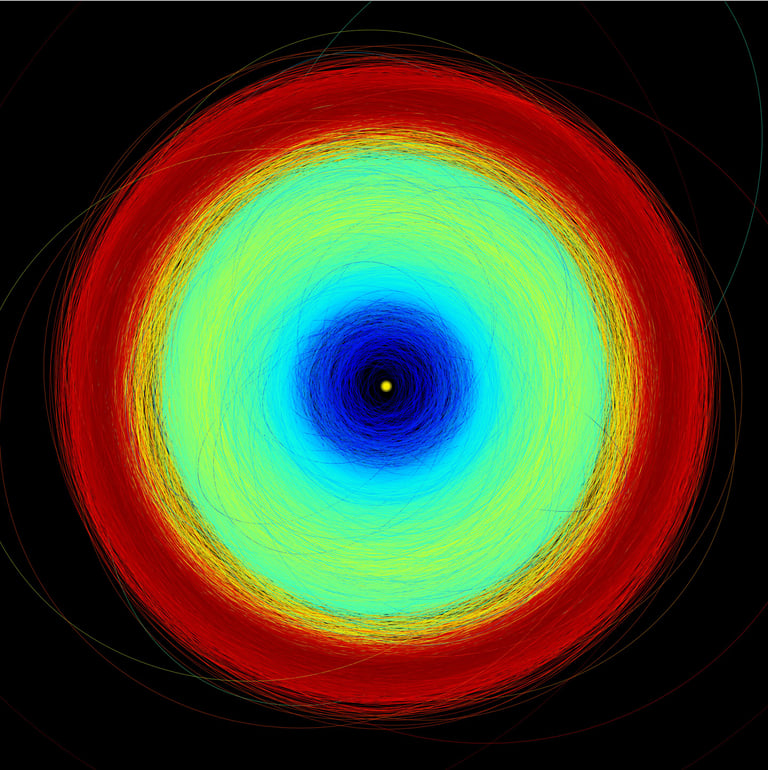

ESA's Gaia mission has made a groundbreaking discovery by identifying potential moons around more than 350 asteroids that were previously thought to be moonless.
Led by Luana Liberato from the Côte d'Azur Observatory, the research utilized data from Gaia's third data release, examining over 150,000 asteroids for signs of gravitational interactions that indicate potential moons.
If verified, the identification of 352 new binary asteroid candidates could nearly double the current number of known asteroid binaries, which stands at about 500.
Timo Prusti, the Gaia Project Scientist at ESA, emphasized the mission's significant role in enhancing data quality and enabling groundbreaking scientific discoveries.
Studying binary asteroids provides unique opportunities to gain insights into the physical and chemical processes involved in the formation and evolution of planetary bodies.
Current data from over 150,000 asteroids allows researchers to look for a typical wobble indicative of double asteroids, caused by the gravitational pull of a companion asteroid.
Gaia's advanced technology enables more precise identification and characterization of celestial objects compared to historical ground-based methods.
The mission's data release 3 has refined asteroid orbit measurements by 20 times, with further insights expected from the upcoming release 4, anticipated by mid-2026.
The upcoming Hera mission, set to launch in October, aims to evaluate the impact of NASA's DART mission, which successfully tested asteroid deflection techniques in 2022.
The Gaia mission aims to measure the positions, movements, distances, and brightness of nearly two billion celestial bodies, significantly advancing our understanding of the solar system.
Studying asteroids is crucial as they are remnants from the early solar system, providing insights into its formation over 4.6 billion years ago.
Summary based on 7 sources
Get a daily email with more Science stories
Sources
Scientific American • Aug 8, 2024
These 352 Asteroids Likely Have Cute Little Moonlets
Phys.org • Aug 8, 2024
Gaia spots possible moons around hundreds of asteroids
Digital Trends • Aug 8, 2024
Gaia shows hundreds of tiny moons orbiting around asteroids | Digital Trends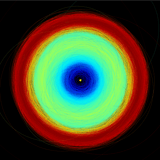
Gaia spots possible moons around hundreds of asteroids
Gaia spots possible moons around hundreds of asteroids