Spectacular Northern Lights Predicted Tonight Amid Geomagnetic Storm Watch and Perseid Meteor Shower
August 8, 2024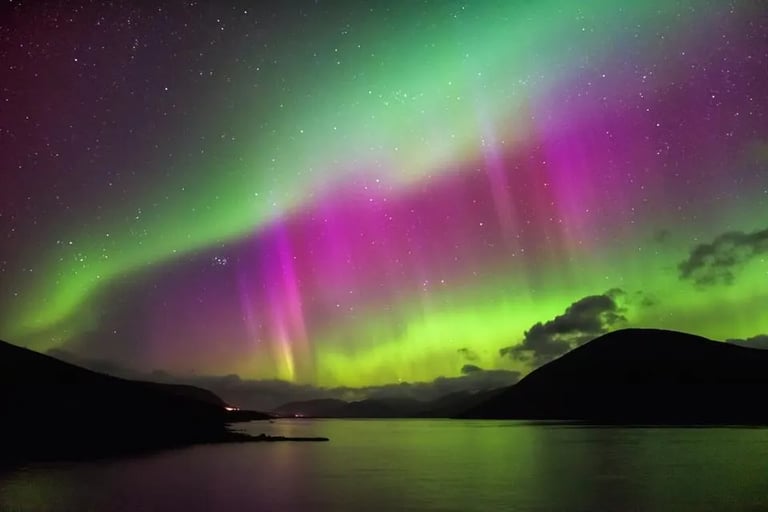

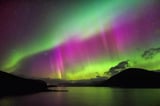
A geomagnetic storm watch has been issued for August 9 and 10, 2024, due to heightened solar activity, which may enhance visibility of the Northern Lights on the night of August 8.
This storm watch is triggered by two coronal mass ejections (CMEs) that erupted from the sun on August 7, expected to reach Earth late on August 9 through August 10.
The National Oceanic and Atmospheric Administration (NOAA) has indicated that auroras could be visible in certain U.S. states, including northern regions, on the evening of August 8.
The best chances to see the Northern Lights tonight are in Canada and Alaska, with potential visibility in northern U.S. states such as Washington, Idaho, Montana, North Dakota, South Dakota, Minnesota, Wisconsin, Michigan, Maine, and northern New York.
The KP index for Thursday night is forecasted at four, suggesting that the Northern Lights could be visible farther from the poles and appear brighter.
A series of coronal mass ejections from active sunspots are expected to result in auroras this weekend, coinciding with the peak of the Perseid meteor shower.
The Perseid meteor shower is projected to peak from Sunday night to Monday morning, adding to the excitement for skywatchers.
Recent increases in solar activity are attributed to the sun approaching the peak of its 11-year solar cycle, expected between late 2024 and early 2026.
Solar Cycle 25, which began in December 2019, has led to increased geomagnetic storm activity and is expected to peak with 115 sunspots, resulting in further auroras.
Auroras occur when electrically charged atoms from CMEs collide with Earth's magnetosphere, interacting with atmospheric gases and releasing energy as light.
For aurora enthusiasts, monitoring the Interplanetary Magnetic Field (IMF), especially the Bz value, is crucial for anticipating aurora conditions.
NOAA's Space Weather Prediction Center provides updates on space weather alerts, while space weather physicist Tamitha Skov offers detailed reports via social media and YouTube.
Summary based on 2 sources