NASA Powers Down Voyager Instruments to Extend Historic Interstellar Missions into 2030s
March 5, 2025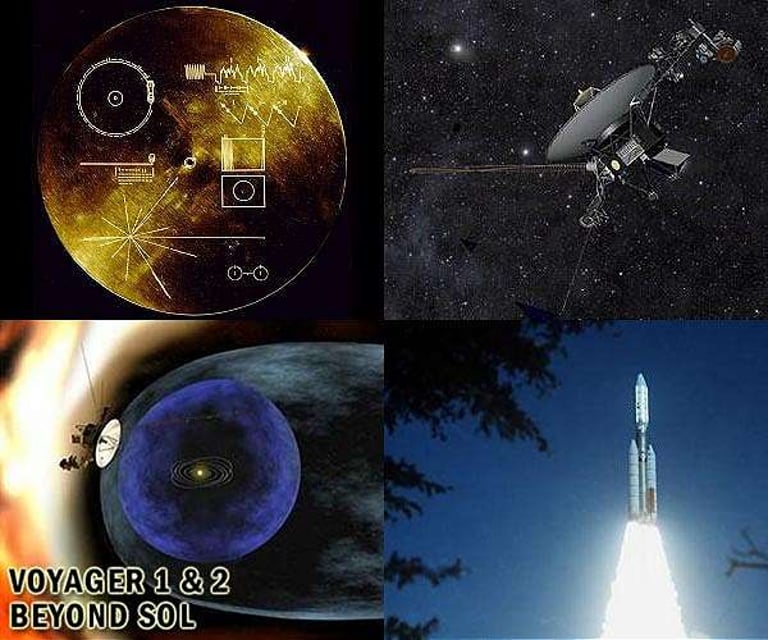


NASA engineers recognize the critical importance of ongoing power management to ensure the twin probes continue to gather unique scientific data.
Despite their age and the challenges posed by deep-space weathering over nearly 50 years, the Voyager probes remain the furthest human-made objects from Earth, continuously sending valuable data back to NASA.
The LECP instrument has played a vital role in analyzing charged particles, but it will soon be deactivated due to energy constraints rather than performance issues.
Voyager 2's Magnetometer (MAG) instrument has provided crucial data on the magnetic fields of Uranus and Neptune and is currently measuring interstellar magnetic fields.
Both spacecraft have encountered communication issues, with Voyager 1 experiencing operational problems for seven months, which were resolved in June 2024, and Voyager 2 losing contact for weeks in 2023.
These shutdowns are part of a strategy to keep at least one scientific instrument operational into the 2030s, barring any unforeseen complications.
NASA is committed to maximizing the exploration time of the Voyagers, even as they face potential unforeseen circumstances that could affect their operations.
Voyager 1 and Voyager 2 made history by becoming the first human-made objects to enter interstellar space, with Voyager 1 crossing this boundary in 2012 and Voyager 2 following in 2018.
NASA has implemented a power-conservation strategy for the Voyager spacecraft, turning off some science instruments to prolong their missions.
As of early March 2025, Voyager 2 is left with only three functioning instruments, while Voyager 1 is expected to lose its Low Energy Charged Particle (LECP) instrument soon, leading to further shutdowns in the coming years.
The mission of Voyager 1 will conclude when it can no longer communicate with NASA's Deep Space Network, which relies on large radio dishes around the globe.
NASA continues to prioritize the Voyagers' mission, emphasizing their unique contributions to our understanding of the cosmos beyond the solar system.
Summary based on 23 sources
Get a daily email with more World News stories
Sources

The Verge • Mar 6, 2025
NASA is making sacrifices to keep the Voyager mission alive
Mashable • Mar 6, 2025
NASA makes crucial move to keep its legendary Voyager craft alive
Yahoo News • Mar 5, 2025
NASA powers down two instruments on twin Voyager spacecraft to save power
AP News • Mar 5, 2025
NASA powers down two instruments on twin Voyager spacecraft to save power