Potential Signs of Life Detected on Distant Exoplanet K2-18b, But Skepticism Remains
April 17, 2025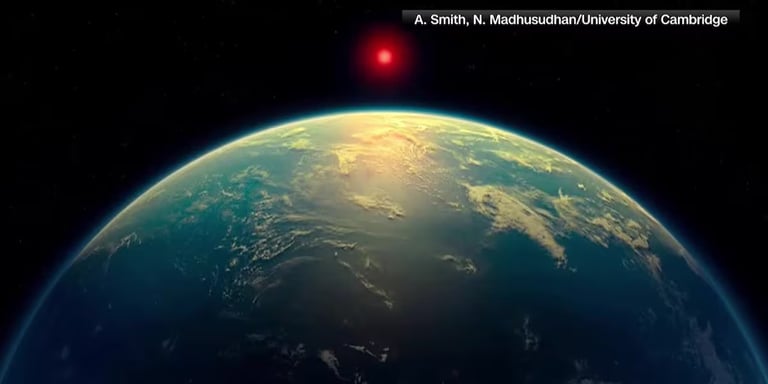


Researchers have detected dimethyl sulfide (DMS) in the atmosphere of K2-18b, a planet located over 100 light-years away, which could suggest the presence of life.
These findings reignite interest in the Fermi Paradox, which questions why we have not encountered intelligent life despite the high probability of habitable planets in the universe.
The lead author of the study, Nikku Madhusudhan from Cambridge University, emphasized the importance of these findings but noted that further observations are needed to confirm them.
This groundbreaking discovery was made possible by the Webb Space Telescope, the largest and most powerful observatory ever launched into space.
However, the lack of a press release from major space agencies regarding these findings, coupled with a singular announcement from Cambridge, raises questions about the robustness of the claims.
Concerns have been raised about the reliability of the data, with some researchers suggesting that the signals detected could be statistical noise rather than genuine biosignatures.
Scientists must validate the DMS signal and rule out alternative explanations, as previous claims of detecting life indicators, such as phosphine on Venus, have faced skepticism and been debunked.
The research team aims to gather additional observational data to achieve a higher statistical significance that could confirm their results as a legitimate scientific discovery.
Prominent astronomers, including Sara Seager from MIT, caution that the excitement surrounding these findings may exceed the available evidence, indicating a divided scientific community.
Future observations with the James Webb Space Telescope and upcoming NASA missions will be crucial in determining K2-18b's habitability, although potential budget cuts could hinder these efforts.
NASA has not officially commented on the findings but reiterated the challenges of detecting life signs among exoplanets, emphasizing the need for extensive observation time.
Experts like Prof. Catherine Heymans highlight that even a five sigma result would not conclusively prove biological origins, underscoring the complexities involved in interpreting signals from distant worlds.
Summary based on 100 sources
Get a daily email with more World News stories
Sources

BBC News • Apr 17, 2025
The truth about life on other planets and what it means for Earth
BBC News • Apr 17, 2025
Promising hints of life found on distant planet K2-18b
Forbes • Apr 17, 2025
Strongest Hints Yet Of Life On A Planet Called K2-18b — What To Know
Forbes • Apr 18, 2025
The Prototype: NASA Budget Cuts Threaten Scientific Discovery