Join NASA's Galaxy Zoo: Help Classify Galaxies with James Webb Telescope Images
April 29, 2025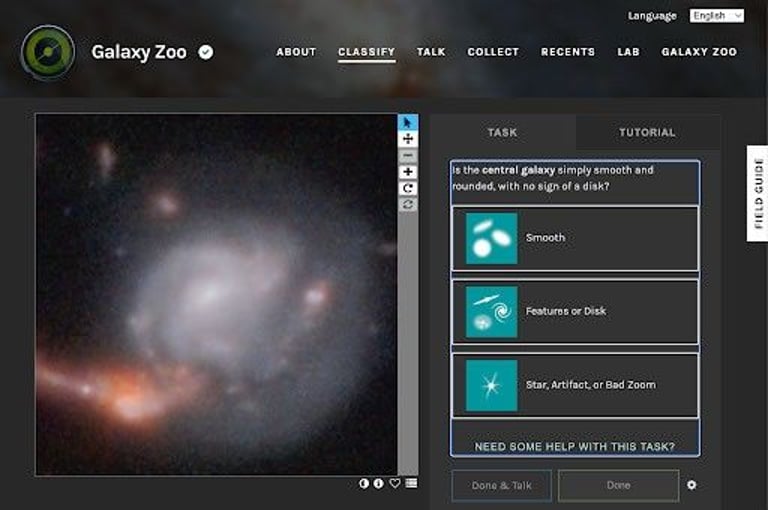

Since its inception in July 2007, Galaxy Zoo has made a significant impact in the scientific community, having previously classified over a million galaxies from various telescopes, including Hubble.
An AI algorithm known as ZooBot aids in the classification process by pre-labeling simpler images and seeking human input for more complex ones, thereby enhancing both AI and human contributions.
The Galaxy Zoo project has already contributed to significant discoveries related to galaxy mergers, black holes, and the formation of spiral arms.
Images from the James Webb Space Telescope allow scientists to observe galaxies as they were billions of years ago, providing valuable insights into their formation and evolution.
NASA is calling on the public to help classify the shapes of thousands of galaxies captured by the James Webb Space Telescope through the Galaxy Zoo project.
Currently, the Galaxy Zoo project hosts over 500,000 images of galaxies, far surpassing the classification capacity of scientists alone.
The project also examines how the shapes of distant galaxies differ from those that are closer, helping to identify historical cosmic processes.
Participants will analyze images and respond to questions regarding whether a galaxy is round or exhibits spiral arms, potentially being among the first to classify these celestial bodies.
Volunteers can easily participate by signing up to answer straightforward questions about the shapes of galaxies, making the project accessible to anyone aged 10 and up.
The Galaxy Zoo science team is supported by the International Space Sciences Institute (ISSI), which has provided funding for their collaborative efforts.
Summary based on 1 source
Get a daily email with more Space News stories
Source
NASA Science • Apr 29, 2025
Help Classify Galaxies Seen by NASA’s James Webb Space Telescope! - NASA Science